Written partly in the first person by Cliff, the rest in the third by me ~ Ian
“On continuous watch since Friday 19th.. Have had little sleep since then.”
After returning to the Div from Palestine in December 1942, Cliff was posted to “L” Section of Div Sigs and attached to 6 Brigade HQ under Brigadier Gentry. Until then he’d always been attached to one or other of the infantry Battalions — often in the front line, in other words.
After the war he often said that he’d served with all the Battalions except the 28th (Maori). Those rotations meant, he reckoned, that he”d missed out on the deep and close personal relationships that formed among long-serving front line soldiers.
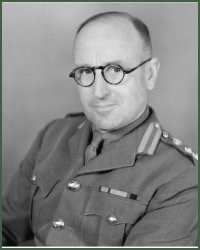
But things were changing for him. Apart from a few days “helping out” at 24 Bn in February, Cliff was never again stationed with front line infantry — who, ironically enough, Gentry had never commanded before being promoted to Brigadier and appointed C.O. of 6 Bde the previous September. Until then he’d been a very successful staff officer.
Cliff came to have great respect for the Brigadier. Gentry was Chief of General Staff by the time he retired in 1955, and when he died in 1991 Cliff wrote that he “impressed me as being very capable and efficient. I frequently heard him giving instructions to Battalion Commanders and other senior officers. Given in the manner that could not possibly be misunderstood. I was very impressed by him at all times and held him in very high regard.”
I think the respect was mutual. Cliff had come to the notice of the brass in Tripoli — received his MM gong, been congratulated on parade by the DIV Sigs CO Colonel Agar and others, and proven himself brave, capable and hardworking. He’d rather have received his stripes than the MM, but his appointment in February to Brigadier Gentry’s personal Signals team was evidence that his superiors knew what he was made of.
§
And so, on 28th February 1943 Cliff was back in Souani Ben Adem outside Tripoli. They were instructed to be ready to move out after midnight. “Div is moving out at 1.00am,” he wrote in his little diary. “Probably to have exercises and then Tunisia.”
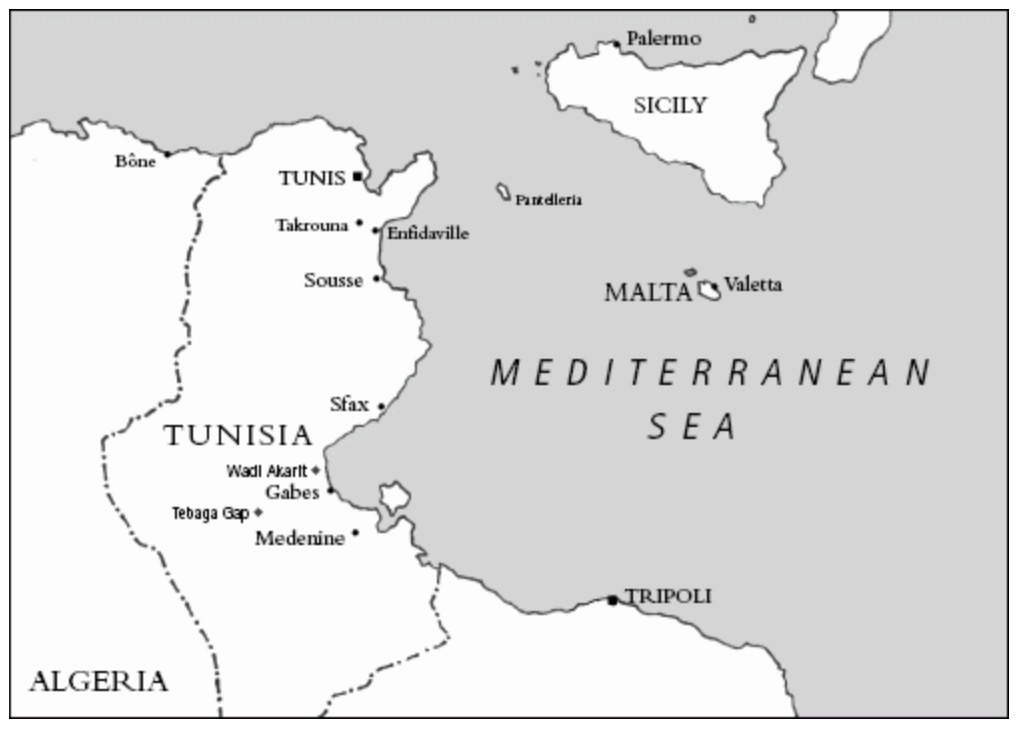
In fact 2NZEF was on the move as part of 8th Army’s advance on Medenine and Mareth, Rommel’s next line of defence, 300km north and west of Tripoli. They left Souani next day, March 1st, at 10.00.am, and their first stop on the road was between 5 and 6.00pm that evening for tea of bully beef and marg. Then, “Travel right through the night.”
From Cliff’s diary:
March 3rd. Arrive Medenine (just outside town) about 7am. Breakfast. Dig in. We have travelled 180 miles since yesterday morning.
March 4th. When we arrived enemy occupied high ground to the west and was expected to attack. Did so three times yesterday with infantry. This morning had cleared off. We were in range but no shells came our way.
Friday March 5th. A little air activity, otherwise quiet. Jerry is moving his forces around considerably and we thought once this morning that we may have to move to take up defensive positions elsewhere. Nice sunny day.
§
March 6th. Continuous watch. Work from 7 pm to 10:30 pm. Drizzle of rain at night. Artillery exchanges. Enemy attack began dawn this morning… Receiving information reports. Read rapidly and hard to write down. Enemy lost lots of tanks today and infantry attacks were badly handled and repulsed. A lot of air activity and several raids. This job is a holiday in comparison with previous experiences. We now have a new 17 pounder tank gun which accounts for the heavy enemy losses. This has been totally unexpected for them and they have certainly suffered.
Rommel’s March 6th attack was a costly — and unsuccessful — operation intended to delay 8th Army’s attack on the Mareth Line, which in a few days would be the New Zealanders’ first major engagement since Alamein — just five months earlier and 1300 miles away to the East. Rommel couldn’t afford to lose men and equipment that he needed to defend the Mareth Line, so he pulled back at the end of the day.
§
Dorchesters and Dingoes
Cliff posted home a photo of the truck that he and George drove into battle at Sidi Rezegh, and another with a Div Cav Honey tank after he left 6 Brigade, but nothing that show Brigadier Gentry’s “ACV” (Armoured Command Vehicle). And yet he and the Sigs team must have spent endless hours in it, listening and transcribing and transmitting on the 9 Set. For that matter I can’t find anything in the books and online resources I’ve checked out, not even an accidental appearance in the background of a photo.
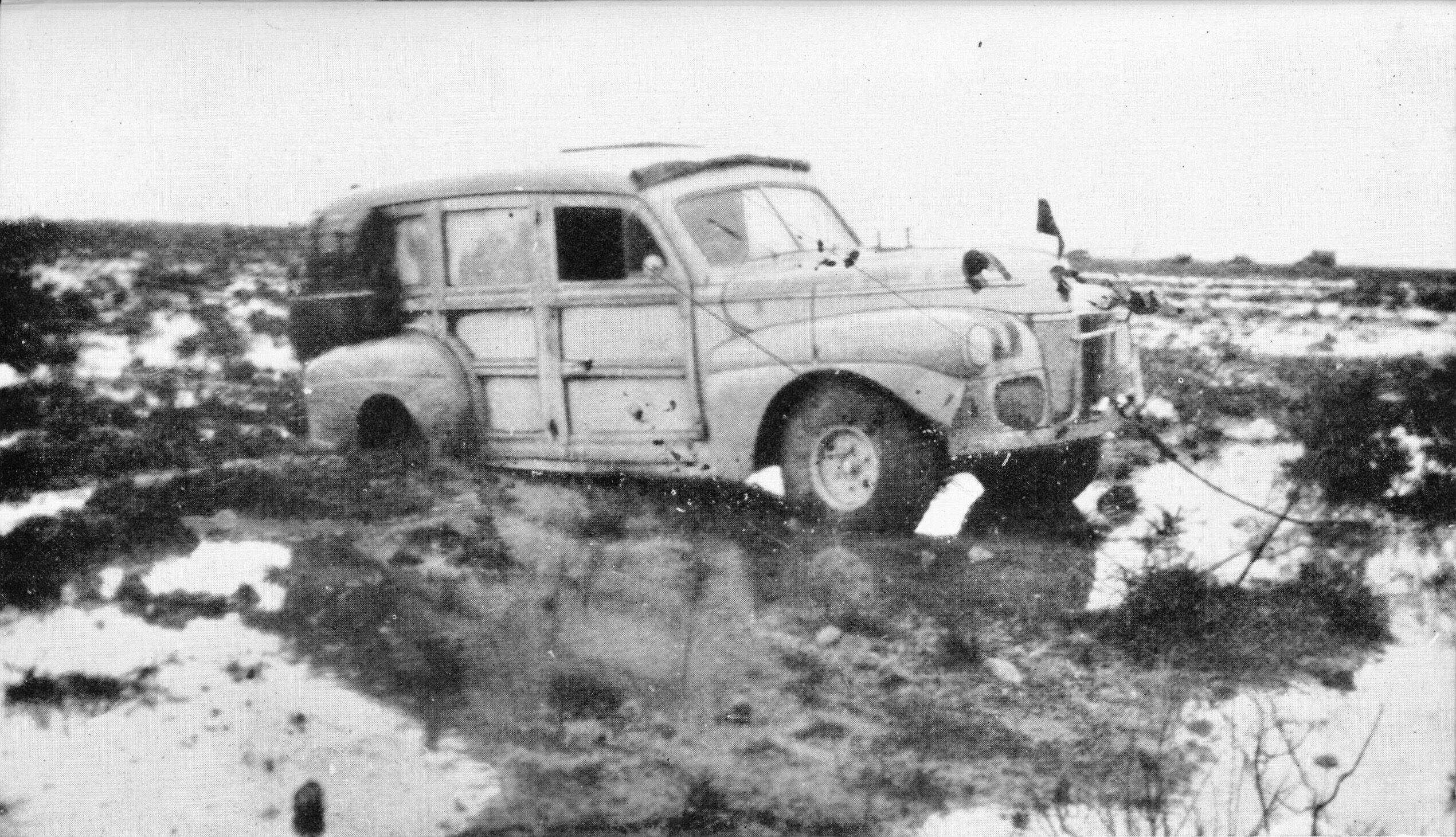
It’s the same with Brigadier Kippenberger. There’s a photo in his book of his command car “bogged down to the axles” at Fuka after the Alamein break-out, but nothing about his ACV. But it’s interesting to speculate about these vehicles, and another chance to add colour to the story of life in Div Sigs…
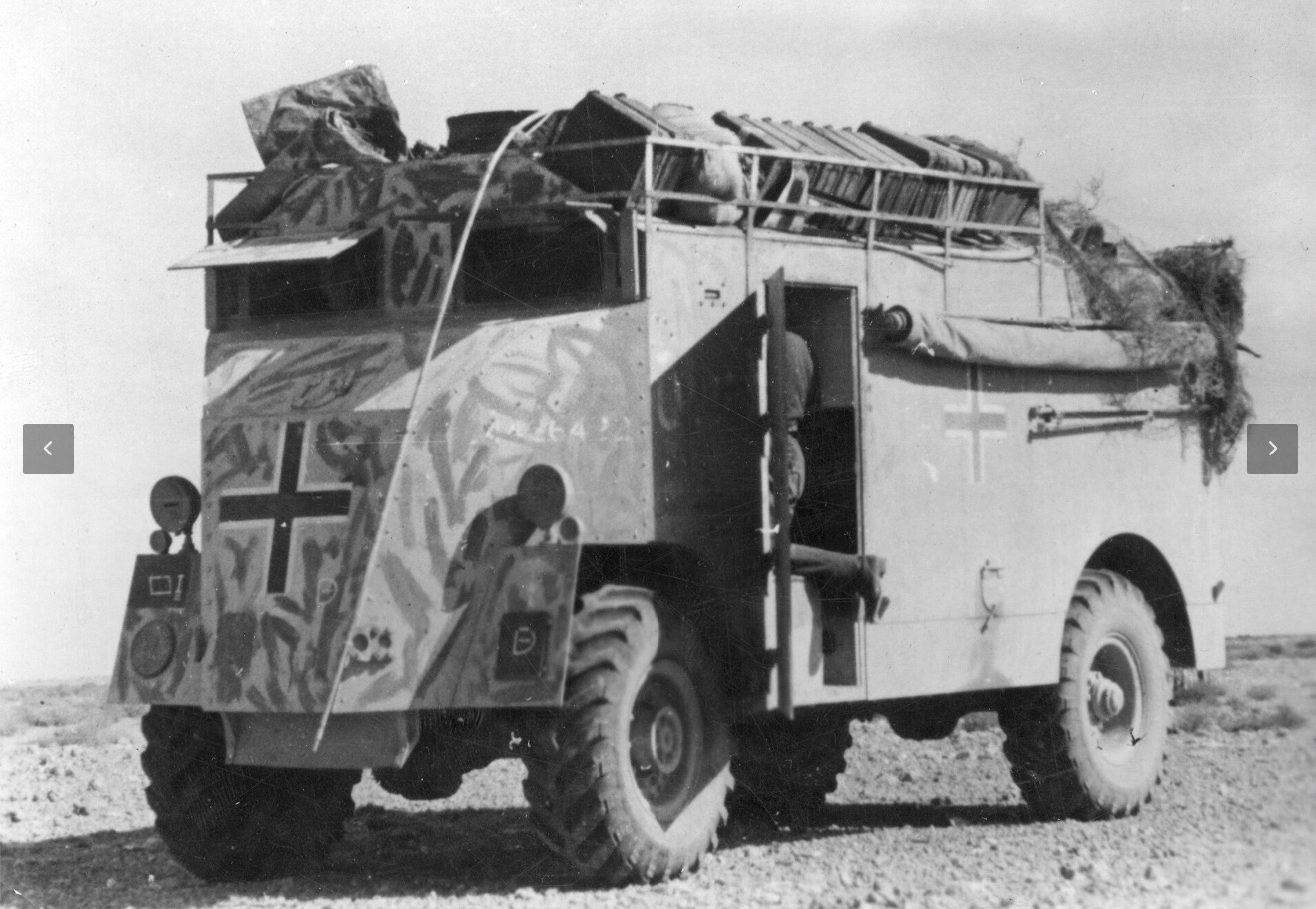
Most likely both Gentry and Kippenberger’s ACVs were British vehicles built by AOC in a variety of configurations. They were so large they were nicknamed “Dorchesters” by the Brits (after the luxury hotel) and “Mammoths” by the Germans.
A bulkhead would separate the operations area from the driver and co-driver, with behind it a desk with two swivel chairs for the senior officers and another in the middle for the signal operator, with generally 2-3 additional signal/ops/intelligence staff, and all the paraphernalia and maps and so on they needed for their job.1
A letter to Dorothy convinced me that Gentry’s ACV was a “Dorchester”, even though I never came across that name:
Our 10 ton war horse the ACV went fairly well with the exception of a broken spring one afternoon, which delayed us for a couple of hours. I hope you don’t think it’s vulgar but we call her the pregnant pig, and when you see the outline of her from a distance that’s just what she looks like. When Charlie or I are off duty we travel on the bridge, which is what we call the seat next to the driver. From up there you look down on everybody.
The other, less likely, ACV candidate was the Morris C8, known as the “Quad”. Cliff seems to have driven it on at least one occasion:
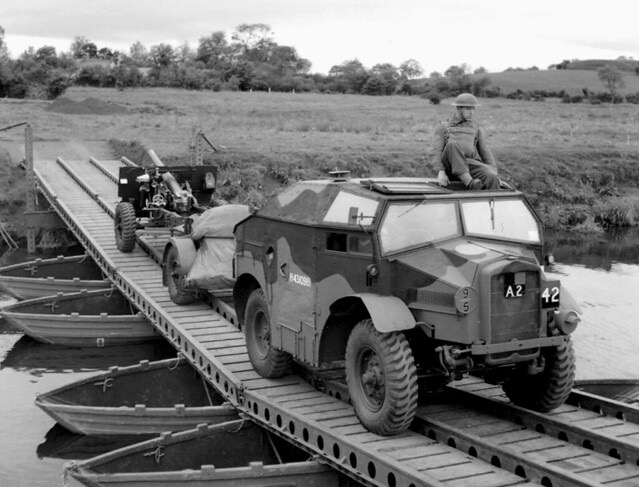
I have driven all the way up here in an old 8cwt truck and its performance is a wonder to be marvelled at. We have covered the most rugged country imaginable and at times the trucks had to perform like goats. Literally jumping from rock to rock. Especially on the job I have had, reconnaissance work seeking a decent track for the Division which followed. I was with the Engineers… After that performance I’m satisfied that Morris is the best on the market.2
The problem with the Quad as a candidate for Cliff’s ACV is that despite its appearance it wasn’t armoured. But, confusingly, Cliff also reckoned that the truck he’d been driving was “only two-wheel drive”. Whereas the Morris C8 seems to have been either permanent or selectable four wheel drive.
His diary continued with another vehicle he became very familiar with — and in fact operated from at Alamein — the Dingo armoured car, another vehicle that was built in multiple configurations.
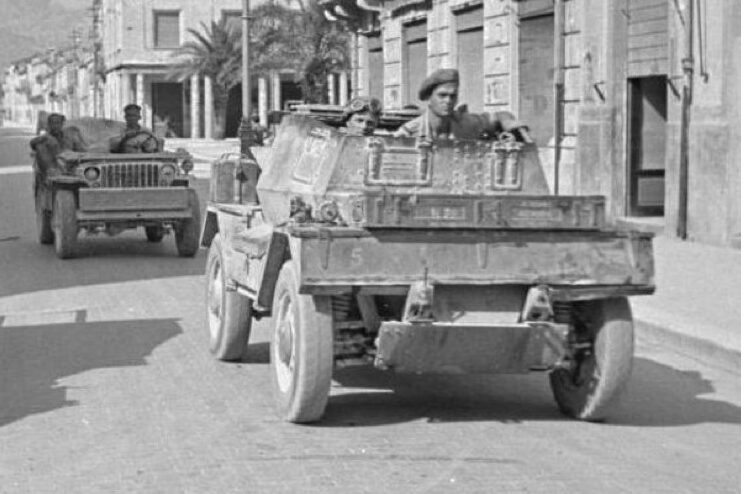
March 9th. Brig. [Gentry] has an armoured car for recce equipped with a 29 set. Jim Grant and I to learn to operate it, I in case something happens to Jim. Play cards most of day.
March 10th. Go for a ride with Jim in the Dingo, through Medenine. A wog town and not very interesting. Have a drive. 45 mph forward and reverse. Weight about 2-1/4 tons, 1-1/4in arm. sides. Ugly squat looking thing. Daimler engine.
March 13th. Easy day, played cards… Glorious tea, fritters, spuds, carrots, rice and fruit.
March 17th. Last night and this morning very windy. Another two days may see us in action. Jerry is in for a terrific thrashing I think.
Cliff wrote to Dorothy that day:
If it weren’t for the wind and fine dust we would be quite comfortable. Have just finished a lunch of hash, bread, marg., jam and of course dust. We are quite used to grating our teeth on grit nowadays so don’t worry much about it so long as it isn’t too bad.
I thought I should write to you again before we go into action once more. We have had another move since I last wrote and the last few days have been very quiet for us. No work to do, I am not doing any driving just now so didn’t have truck maintenance to do, so much of the last few days have been spent playing 500. We get quite a lot of fun out of it and plenty of ups and downs. There are six of us Sigs on one vehicle so there are always players to be had.
One comfort we have is the wireless. Charlie has got a Jerry set in his bivi and we all have leads from it to earphones, so at night we can be lie back snug between the blankets and listen to the news good and bad. We usually listen to BBC and sometimes to an enemy propaganda station in Tunis, and Rome, Berlin and Radio Metropole. The station at Tunis broadcasts propaganda to the Yanks and very often is amusing to listen to. Pete and Sally run the programme and usually finish up with an amusing note. Last night Sally sent us all a sweet kiss. Another night she said “I’ll be seeing you boys!”,and we said “I’ll say you will!” only in different words.
March18th. Yanks take Gafsa. Jerry is moving towards Gabes. Offensive on main Mareth line begins tomorrow night. We move then and should be well into it by dawn. Miserable cold windy rainy day.
Gafsa is an ancient oasis town 100 miles NW and inland of Gabes. More evidence of Allied encirclement of Rommel’s forces, this time by 1st Army.
March 19th. Listening watch begins when we move at 6 pm. Travel until 1 am on the 20th, moving approximately NNW. Brigade Major gave us a very good outline of the plan of action.
§
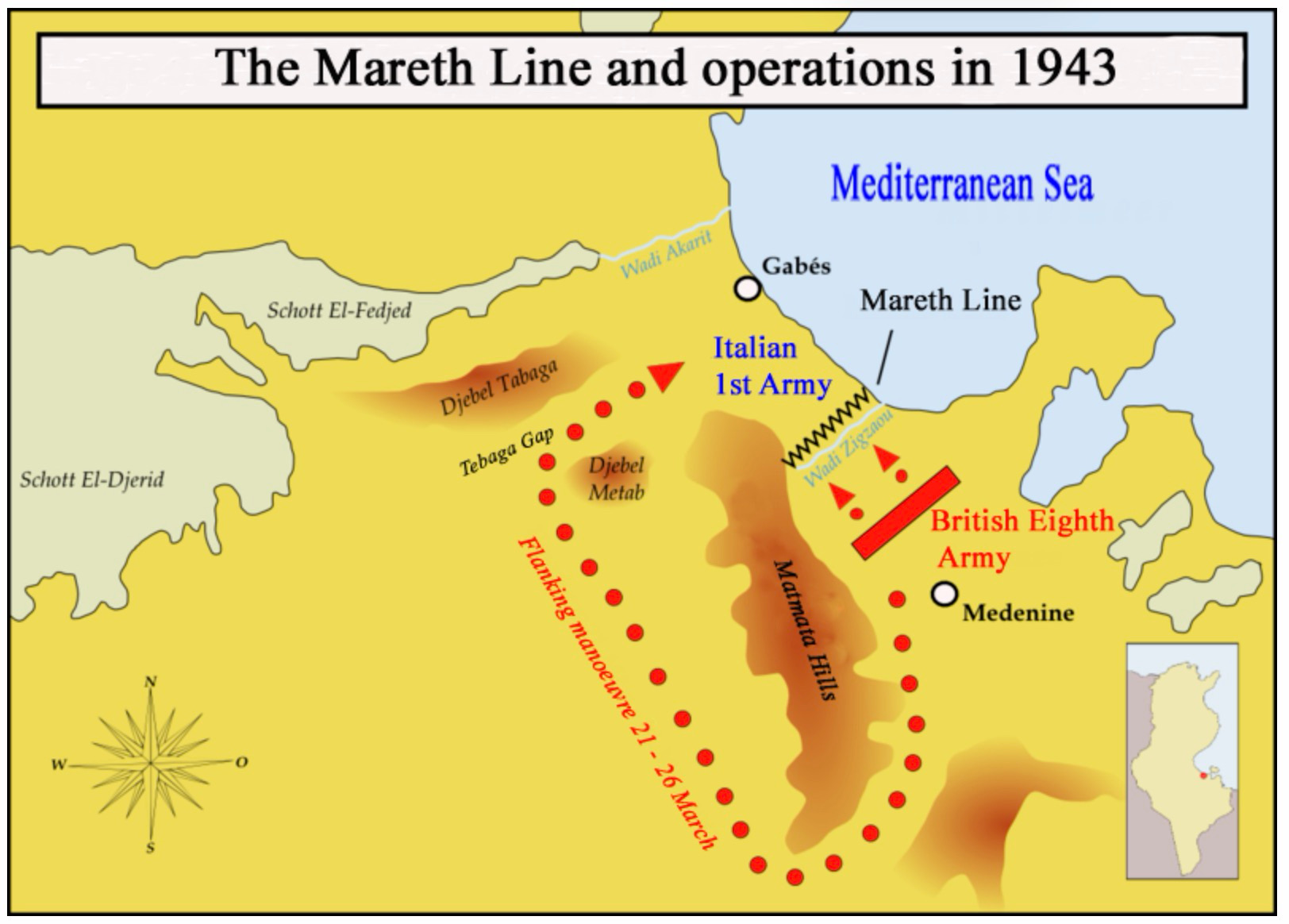

The Major may have given the Sigs men a good briefing, but it didn’t make it into Cliff’s tiny diary, understandably enough. The Mareth Line was similar to Alamein in the sense that it was a narrow defensible front between the sea and an impassable natural feature — impassable to armour at least — in this case the Matmata Hills and beyond that the Djebel Tebaga. Tunisia being a French colony and Libya Italian, the Mareth had also been fortified in the 1930s by the French along the line of a wadi, another natural tank obstacle. However the Allies had two advantages — access to the designer and commander of the French defences, and reconnaissance by the Long Range Desert Group, which had discovered a practical route via passes through the hills, culminating in the Tebaga Gap.
This created the opportunity for the famed Left Hook, whose goal was to outflank the Axis defenders of the Mareth Line and cut them off, as the map illustrates. 2NZEF, heavily augmented3, was to advance in three stages — two night marches of 20 and 40 miles ending just short of the Tebaga Gap, then the capture of the entrance to the gap at first light on 21 March or as soon as possible afterwards. They would then advance to El Hamma, north of Gabès.
§
Cliff neglected his diary for the next few days, but after the war he quoted at length from Brigadier Howard Kippenberger, Gentry’s counterpart at 5 Brigade, who described a “tremendous turning movement” involving, 27,000 men:
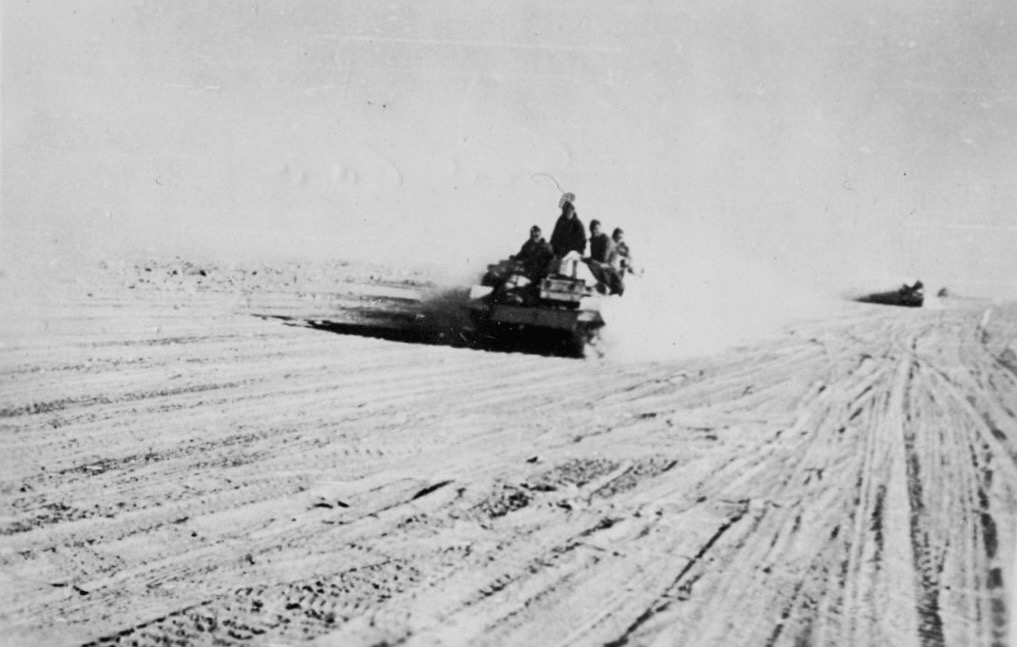
The last stages of this move were made by night and we never did more difficult and tiring marches… On the 19th we moved on again, the King’s Dragoon Guards and our Divisional Cavalry leading, followed by 6 Brigade. Most of the way we could only travel in three columns, often on bulldozer tracks. 5 Brigade was a long way back in the column, often 20 miles from the head…
We had to make a march of 260 miles, of which 140 miles was over trackless and very rough desert. Daring reconnaissance had been made by light car and Jeep patrols and it was clear that once more a great deal would depend on our bulldozers…
§
Saturday March 20th. Cliff’s diary (with Gentry and 6 Bde): Move approximately 7:30 am. Divisional Cavalry, Kings Dragoon Guards and 8th Armoured are in front. Meet little opposition from small outposts. Enemy for the most part moving towards Bel Hamma NE. Bombed by Yankee F. Bombers, 3 killed, three wounded. One petrol truck on fire.4 Stop about 7/30pm before second objective.
Kippenberger again:
On the late afternoon of the 21st the advanced guard reached the approaches to the Tebaga gap and struck solid opposition. … There was a broad minefield right across the gap, here not more than 3 miles wide, with troops in position behind it and an anti-tank ditch. In the centre of the gap behind the minefield there was an isolated, flat top feature…
There was not much daylight left when the position became clear, but the General [Freyberg] decided to attack that night. It could only have been done by very efficient and experienced troops…
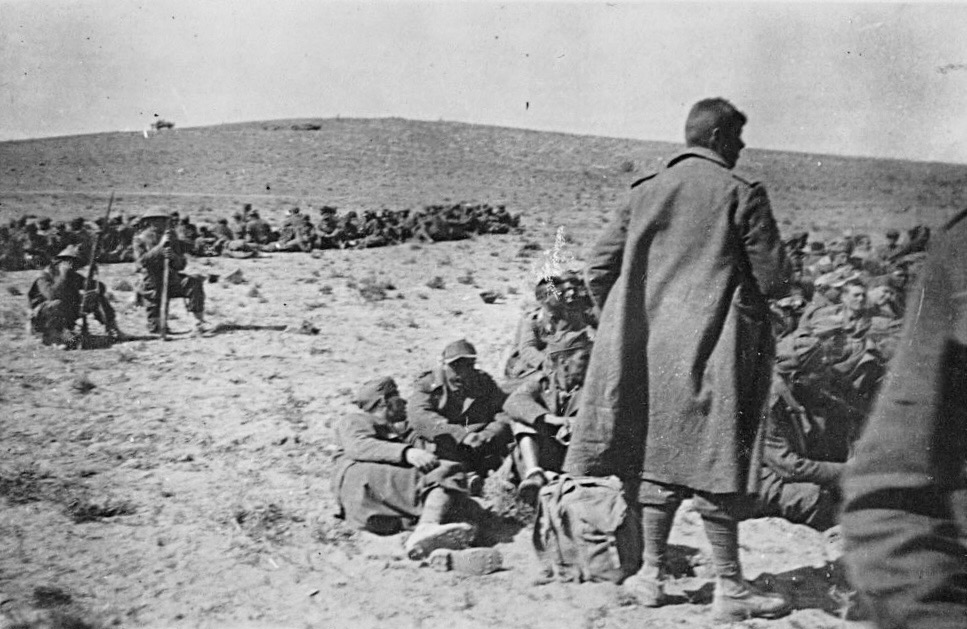
At 11 pm 6 Brigade attacked behind an excellent barrage with complete success. Eleven hundred Italian prisoners were taken5 with only some sixty casualties and, although the opposition was not stubborn, it was a brilliantly executed operation…
5 Brigade watched this action, which was most spectacular, from six miles away…
Next morning Kip went to 6 Brigade HQ to congratulate Cliff’s boss Brigadier Gentry on his ‘brilliantly handled action”.
He had settled down in a most unhealthy area and was being steadily shelled without appearing to notice anything. While I was there some fighter-bombers came over, machine-gunning and dropping some light bombs, but not so very light. Ike Parkinson and I took cover in the same slit trench, rather crowded, until the atmosphere became more peaceful — then thanked Bill for his hospitality and departed without undue delay.
Cliff took this a bit personally — in the margin of Kip’s book he wrote that it was his slit trench they’d taken cover in.
§
Kippenberger felt that if they’d continued the attack immediately they would probably “have scrambled through the gap somehow”6, but Freyberg preferred to hold back to marshal his plans and forces, and this allowed the Germans to bring up reinforcements and prevent any quick victory. Meanwhile they’d also repelled the British advance on the Mareth line, which led to Montgomery deciding that the “left Hook” would become the major Allied effort. The next British attack began on the afternoon of the 26th, but this time with British tanks and Kippenberger’s 6 Bde leading, this following an intense bombardment of the Germans by artillery and from the air. The attack was successful, but only after bitter hand to hand fighting on the Maori Battalion’s objective, Hill 209, where tanks could not engage due to the terrain.7
By the 29th 8th Army had taken Gabès on the coast.
§
Cliff covered the same ground in his neglected diary on the 28th:
Since the 21st we have been engaged in two successful and decisive actions. 25 and 26 Bns took part in the first and there were somewhere in the vicinity of 1500 prisoners taken, all Italians…
On 25th we captured our first German POWs from the 21st Panzer Division, but have had many more since.
Our casualties have been light. From Bde HQ we have had one or two wounded and killed. Captain Howard, our former OC at Trentham [training camp in NZ] and now our Staff Captain, was wounded and our cipher man hurt by bomb splinters. Another man was wounded when his line truck hit a mine and another through tampering with an Italian rifle.
Moved forward to a fresh position last night, 27 March. This afternoon an infantry and tank attack, this time including [Kippenberger’s] 5th Brigade. A great success. Bridgehead made for our armour and hundreds of prisoners taken. I don’t know how many. Many German and Italian tanks KOed and many guns captured or destroyed. Casualties again fairly light. Our air forces also played their part using tank busters and straffing and bombing. We had a big program on the 25th and 26 March. I’ve had a very busy time on the 9 set intercepting traffic of use to Brigadier Gentry. Shelling has been a bit disconcerting at times but altogether much safer for me than in previous scraps.8
“On continuous watch since Friday 19th”, he wrote. “Have had little sleep since then.”
Footnotes
- The South African Military History Society
↩︎ - “We have covered the most rugged country imaginable and at times the trucks had to perform like goats. Literally jumping from rock to rock. Especially on the job I have had, reconnaissance work seeking a decent track for the Division which followed. I was with the Engineers. I didn’t think it possible to go up a hill such as the one we went up one day she went up like a bird, although I thought it might tip over backwards. She also went down 3 to 4 foot steep banks and there were other trucks in trouble everywhere. She sailed through loose sand like nobody‘s business without getting bogged and she is only two wheel drive. After that performance I’m satisfied that Morris is the best on the market. It certainly leaves the V8 Ford and the Dodge I drove for a time well in the shade. Before this trip it had been written off as unserviceable but as there was no replacement available she was kept. She is good for a few thousand miles yet.”
↩︎ - The Corps consisted of New Zealand Division, 8 Armoured Brigade, British medium and field artillery regiments, the King’s Dragoon Guards, Le Clerc’s Fighting French, and the Greek Sacred Squadron, in all about 27,000 men, 180 tanks, and 120 guns… — Major-General Sir Howard Kippenberger, Infantry Brigadier, p. 276. The quotes that follow are from the same source.
↩︎ - After the war Cliff wrote, “The first of many such incidents.”
↩︎ - About 4 o’clock in the morning I was awakened by a bleating noise and found it was caused by 500 prisoners whom their escort had halted nearby and who were all complaining to one another. Highly indignant at our deep sleep being disturbed, I ordered them to continue moving to daylight… In the morning another 600 prisoners appeared, led and escorted by a single private of 26 Battalion who walked at the head amid a crowd of be-ribboned Italian officers. I stopped and asked if he wanted any help; his destination was the supply point, still 20 miles on. “Oh Lord, no!” he said, “They trust me”; and proceeded cheerfully, his charges chattering like parrots and apparently quite happy. — Kippenberger, p. 279.
↩︎ - Kippenberger, p. 280.
↩︎ - This was the engagement where Lt Ngarimu won a posthumous VC.
↩︎ - Cliff wasn’t feeling as relaxed about shell fire as he’d been back outside Tripoli. He wrote to Dot: Although we are pretty safe just yet, I can hear the guns roaring. That always gives me a nasty feeling in the pit of the stomach. It is nothing to worry about, for it is natural and I’m pretty sure everyone gets it. It is just fear and it can be a nasty thing if it gets hold of you properly, and that is the big job — overcoming it. But I believe it is the very thing that makes you duck at the right time and saves your bacon occasionally…
↩︎