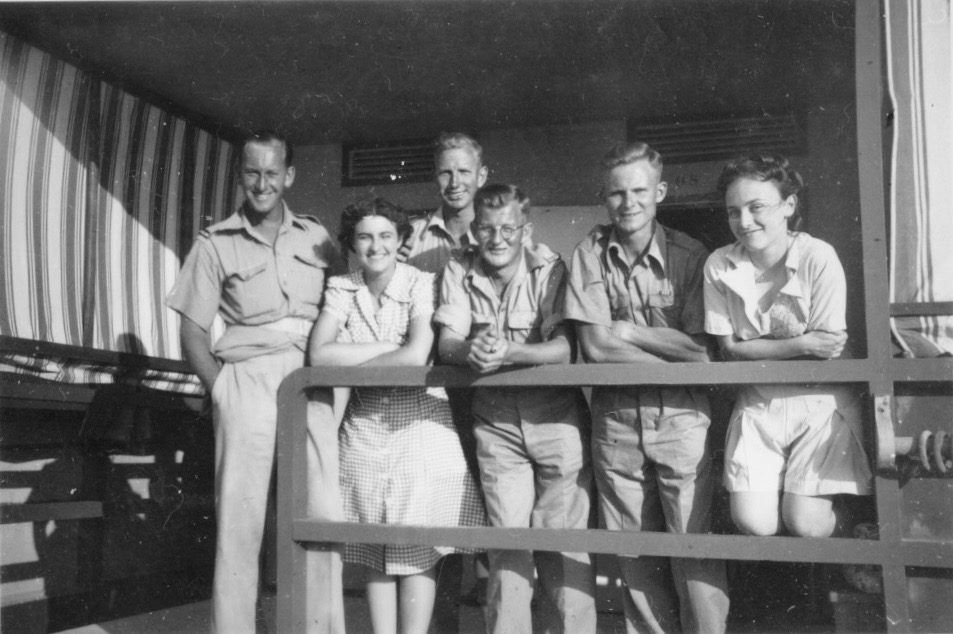
We’ve spent a long time on the people and places Cliff encountered in uniform, his experiences in battle and the long months between. How the war changed him, and all the men arriving back in Alex in June ’43. What’s barely been touched on is the loneliness. This is taken from two long letters he wrote to Dorothy about his time in Alexandria in June 1943. ~ Ian
§
The 2NZEF men were granted a fortnight’s leave after their return from Tunisia. They took it in two contingents, and Cliff’s, the second, was divided again, one group going straight to Alexandria and the other, including Cliff, to nearby Sidi Bishr, the camp where he’d convalesced after Sidi Resegh. Those heading to Alex got a 3/- per day leave allowance, while those at Sidi Bishr got free food and lodgings — in tents!
Not surprisingly Cliff, and doubtless many others, preferred to get as far away from the army as possible — to sleep in a real bed in his own bedroom, and eat off tables and tablecloths for a change. They could move to Alex if they wanted, but without the 3/- allowance, and that’s what Cliff decided to do. He’d also be able to team up with his mate Dink.
Accordingly on Sunday the 20th he moved to the Elite Hotel, where he spent a night or two being “eaten alive” by bed bugs until he could move somewhere else. He and Dink went to the pictures that evening, and next morning took a walk around the shops before going to the Jewish Club. They were hoping to see Lisette, a young woman they’d met there while on leave before Alamein. They were in luck, and Lisette invited them out to her family bach (as Cliff called it) on the beach at Sidi Bishr a couple of days later. Two other New Zealanders would be there, Lisette said, but not the younger girls they’d met before, because they had exams.
There were bound to be others still, Cliff thought, possibly Mum and Dad, because for girls to be alone with men, especially soldiers, wasn’t done. It was good of them to invite the Kiwis, who had nothing to offer in return except presents that they wouldn’t accept.
He’d been resentful about the lengths New Zealanders had gone to engage with the Americans and show them a good time, while “we over here have no opportunities for social life, no parties, no people to visit or talk to.” In fact they’d run into a group of well to do people who seemed to be doing much the same for 8th Army men in Alex. And as with the Americans, sometimes there were romantic consequences. His friend Johnny had returned to Camp head over heels in love with Fanny, another girl they’d met the previous October. Too bad really, Cliff thought, because they had nothing in common.
After meeting Lisette, he and Dink went on for a swim and sunbathe at Sidi Bishr, came home, had a late meal and went to the Forces Club to watch the dancing for a while.
Not much good to us, really, for the girls have their own particular dancing partners and most of them stick to their friends and won’t dance with anyone else. The friends mostly being Base Wallahs who are here all the time and therefore well-known. I watched one sailor, quite a nice chap, ask six girls one after the other for a dance and all refused, so I spared myself the humiliation.
Next morning the two of them had another walk around the shops and Cliff bought a couple of towels for “our“ glory box.
It gives me quite a thrill to buy something for us. Not you, not me, but us! Just you and me, but I guess visitors could use them too. Our visitors. Just think of it!
He’d seen some lovely lingerie too but wasn’t sure Dorothy would like it, wasn’t sure about size etc and so left it, but gone back a day or two later and posted it with some matching thread so she could make adjustments.
He wrote again on Thursday the 24th, the day after their first visit to Lisette at Sidi Bishr.
When they arrived there had been no sign of her. An elderly Greek gentleman asked if they were looking for somewhere to change and they said no, they were waiting for someone. Cliff phoned her at the Club, and she was full of apologies, but couldn’t come until 4 pm. If they asked for Miss Zuraki’s cabin she would look after them until then.
So down the beach we went again, and seeing the old Greek gentlemen we enquired from him. He said certainly, he knew her, follow me please, with a grin on his face. Away we went and met Miss Zuraki and her mother, and to our surprise. our dear old gentleman was Pa. They gave us a nice afternoon tea and we changed into our togs and went with Miss Elsa down onto the sand until Lisette arrived.
In due course Lisette turned up with a French girl called Colette and the two Kiwis. After a while two English Sisters arrived as well, and two Tommies. Both the English boys had lost a leg and one of them an eye. The two Sisters, Marie and Rona, had had a lot of difficulty arranging to take them out, their first day away from hospital. Mr and Mrs Zuraki entertained them while the others went swimming. Cliff said the best fun he had was trying to teach Marie to surf. She was only as big as threepence (“more or less”) and the waves would take possession of her and the board, and he had to go to the rescue quite often. The Sisters and the Tommies left after tea, but the others went down to the sand to act the goat again for a while. After they’d helped pack up, the Zurakis drove Dink and Cliff to the tram terminus in their car. Lisette invited them out again on Sunday, and they left feeling pleased with themselves. It was Dink’s first day out like that since he’d left New Zealand.
§
Next day they went to the United Forces Club for lunch and tea. Lisette worked there two nights a week, and two more at the Jewish Club. That night she was at the Forces Club and Cliff had a waltz with her. He found out she was Swiss, and didn’t need to work for a living but enjoyed it.
Meanwhile he filled his letter to Dorothy with chatter about home, comments on her letters, and how beautiful she was — how he liked her hair long, how he’d love to see her in her new lingerie (he but no one else!) and how he wanted, needed, so badly for them to be together. Most days were developing a routine: a walk around the shopping area in the morning, out to Sidi Bishr in the afternoon for a swim and then the pictures at night.
§
There were more people on their second day at Lisette’s — all last Wednesday’s crowd except the Sisters and Tommies, as well as Colette‘s Mum and Dad, her Granny and two other elderly relatives, a young French sailor and his fiancée, plus a couple more. Lisette’s younger sister, still swotting, brought a book with her and left after lunch. They spent the day swimming, walking, eating and talking. Colette‘s father was a cotton buyer for the Michelin tire company and before the war and the capitulation of France used to buy up to £2 million worth per year. Colette was a school teacher hoping to go to Algiers and work in a college there. The whole family were keen to get back to France — they liked Egypt but France was much better.
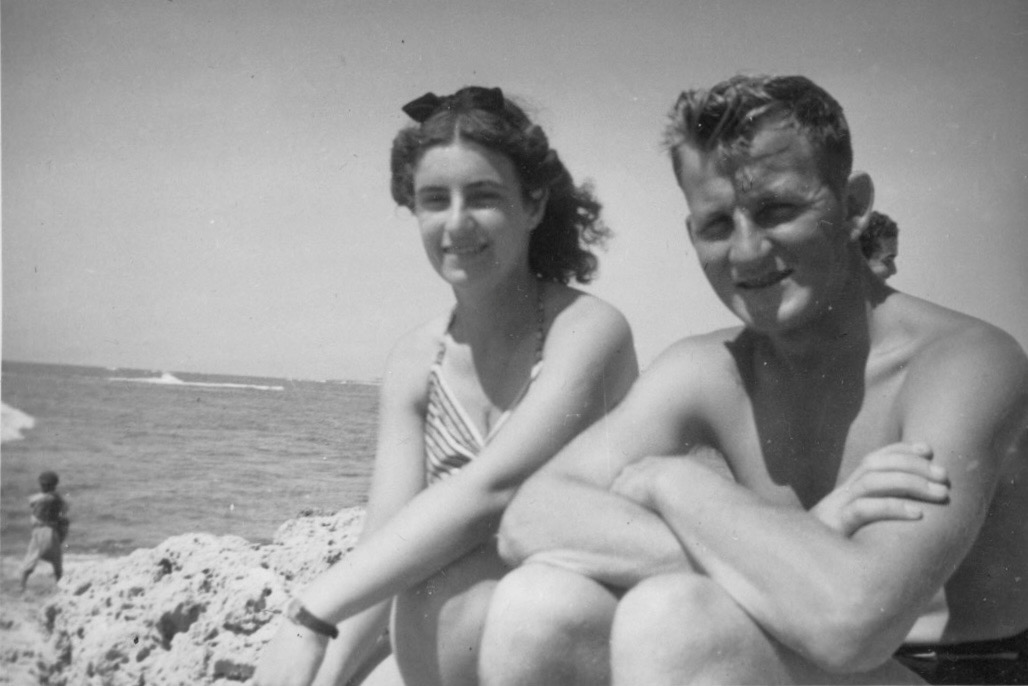
Colette was a tiny girl, about 5 foot nothing, dark but with blue eyes. Like most French people he found her pretty hard to understand, and she was inclined to be moody. All the same, they got on well together. “I told her all about you, dear, and she was very sympathetic when I told her how much I wanted to be with you again.”
He had to tell Dorothy about Colette because he’d asked her out to a show called French For Love1, which he and Dink had already seen. He’d expected to be turned down because people were strict and didn’t like their daughters going out alone, and the show was a bit saucy. But Colette was very keen and her father agreed to her meeting Cliff 20 minutes before the curtain went up. He would collect her at the theatre after the show.
You can trust me, Cliff told Dorothy, in rather more words than that, but he could understand why she might be anxious — “for the very same reason I wouldn’t like to hear of you spending too much time alone with any young men, except myself of course.”
“Please believe in me, sweetheart, as I do in you,” he said. “Tons of love and sweetest dreams.” And then he posted the letter.
§
The suspense! He didn’t write again until the 5th of July, when he was back in Camp after leave. It was his birthday and there was a cable from Dorothy waiting for him. It helped cheer him up a little. The heat was stifling, the hot dusty wind was doing its best to blow it away, and everything was covered with sand and dust. “I’ve had a wonderful leave,” he told her, “and I only wish it could have lasted longer.”
I took Colette to the show on Tuesday night as we had arranged. Met her at Ramleh Station at 6:40 pm and went straight to the show, which started at 7.00. French For Love was quite good, and especially amusing under the circumstances. It would take too long to explain the theme here but it more or less portrayed the British idea of French morality and lack of convention. I asked Colette if that was how people behaved in France and she assured me most definitely that it was not. She said that people in southern France were inclined to be unconventional but that the people of northern France were very strict on the whole. She said, when I asked her where she came from, that she came from central France, and that I could just about take her as being the average. She enjoyed the show, and when it was over Pop was at the door waiting for her with the car. We bid each other a very stiff and formal good night, and that was that.
§
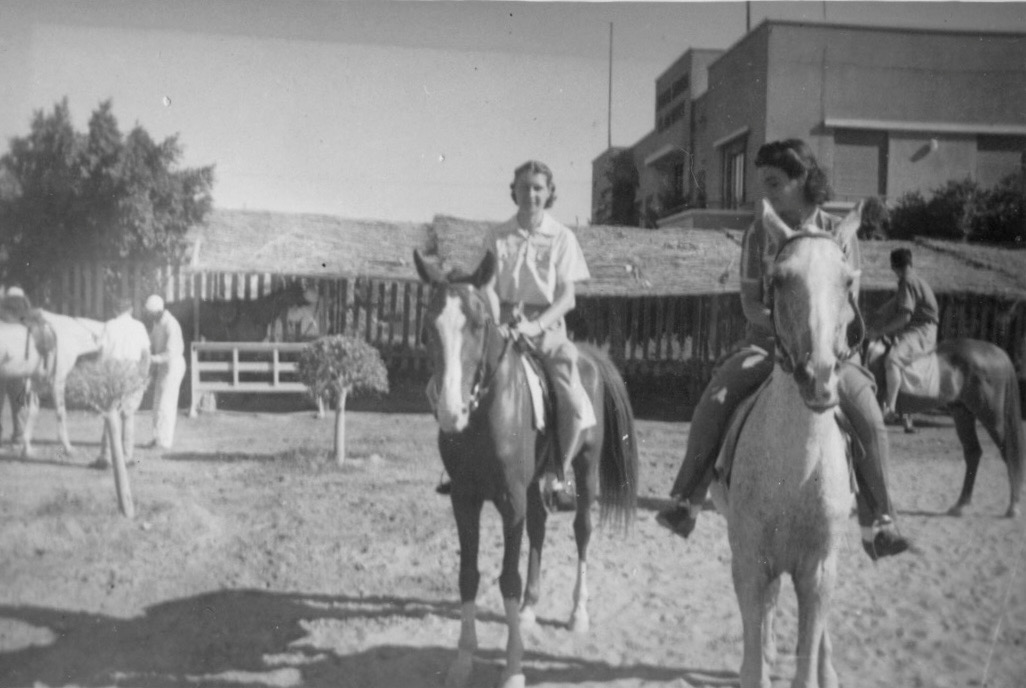
On the Friday Dink and Cliff were invited by Elsa and Colette to go horse riding with them. It was an 8.00 am start so they were up early. According to Cliff the horses were slow and old, mainly retired race horses. It was hard getting a canter out of his, but the girls were taking lessons and happy with a trot, a bit too nervous to go faster. A riding instructor rode with them and offered tips on how to hold the reins etc. Cliff didn’t think he needed the advice.
The price will shock you, 10/- per hour. We only rode for an hour, thank goodness. The girls’ lessons were paid for in advance so they didn’t cost us anything.
But it was very pleasant in the Smouha park, a lovely place, and his first ride since last time with Dorothy. He’d told the two girls about her and her riding abilities, and it brought back pleasant memories.
Colette drove them to the Sidi Gaber tram stop in her car, and they headed home, having agreed they’d meet again that afternoon at 4 pm, back at Sidi Bishr. They went straight there and hung out with a couple of Sigs men until the agreed time, then Cliff and Dink went to Lisette‘s bach to meet her, Colette and Elsa. There were four men, including a Rhodesian and a married Div Sigs officer who was there as chaperone. Colette had developed a cold and couldn’t swim, and the girls had to leave at 7 pm, but they swam, drank tea and talked until it was time to go. Colette drove them as far as the tram stop, and they said goodbye to Lisette and Elsa en route.
That was the last I saw of them, he wrote.
§
Lisette invited them to ring her when they were in Alex, but how likely was it that they’d ever meet again? Cliff wasn’t even sure they’d get back to Alex. The war in North Africa was over — where next?
But Dink did see Elsa again, the very next day, at Alex Station on his way back to Maadi. The local women used to put on free tea and cakes when a troop train was leaving, and Elsa, being one of them, dragged Dink in to help. It was hectic, and Cliff could imagine the remarks the boys would fling at him. “How do you manage it, Dink?” Not many boys got to associate with girls like this and they were looked upon with envious eyes. He and Cliff had been very fortunate.
§
Clearly there’s a lot to read between the lines of Cliff’s letters. He’d only met with Colette five time, he said, but they’d connected with each other. How else do you find out a girl is moody, a bit spoilt and likes her own way? Or conceal your true feelings by saying that? — and what had she found out about him?
It was coming up for three years that he’d known Dorothy, They’d spoken on the phone for a while before that. When they arranged to meet in person at a function in Paparoa, she’d told him to look out for her red hair. There were three redheads, he wrote in Alex, but I knew which one was you. He’d been called up for the army two months later.
Now, after two years in North Africa he was desperately in need of love and affection. Colette provided it for him, and I like to think it was mutual.2
He exchanged addresses with Colette, and a week later he received a letter. After the war he wrote:
I can never forget a few of the words she used. “All we ask of each other is that sense of a presence. Of a relief from loneliness.” We had shared some very passionate moments but we both knew that that was as far as it could go. She was engaged to a far away Free French serviceman and I was engaged to Dorothy in New Zealand.
Colette must have continued to write occasionally, and she’s mentioned a few times in letters to Dorothy until mid-September. In his diary he recorded a new address ℅ the Free French Forces in Algeria. They weren’t permitted to write until after the Div relocated to Italy in October, so he wrote to her from there but received no reply.
§
And by the way, Cliff wrote to Dorothy, he’d learned a new song while on leave.
“There’ll be bluebirds over the white cliffs of Dover.“
Do you know it? I think it’s a lovely song and I’ve been humming it to myself ever since I first heard it.
Two more years.
Postscript
Young and awkward
What an enormous bite was taken out of the lives of our parents’ generation by the war — the people who survived, that is. When I was 27, the age that Cliff was returning from the war, Heather and I were married with two children, and awaiting Graeme’s phone call to say that we were too old to be conscripted.
I said early on that Cliff’s letters to Dorothy were deeply personal and that I’d resisted reading them for decades — I’d try to tell the story “without oversharing their intimacy and awkwardness.” I hope now I haven’t strained too much of the flavour out of them, because they certainly were intimate and awkward, and in this chapter that’s partly the point.
It’s brought me much closer to him as a young man, and single, not a man in his 60s as I normally recall him. And wondering too, do we in our middle years and later even remember — really — what it was like to be young? I do because I wrote it down. It was excruciating.
Mind you, in the interests of a balanced view it would help to read the letters Mum was hitting back over the net to him. The strange thing is I can’t imagine them being intimate and awkward.3
Footnotes
- French for Love – A Comedy in Three Acts by Marguerite Steen and Derek Patmore.
↩︎ - When we were in Italy for the Monte Cassino Reunion I asked Dad about matters of the heart. It adds a bit to what was in his letters. He was an honourable man.
↩︎ - I’ve since found one surviving letter, dated 20th February 1945.
↩︎