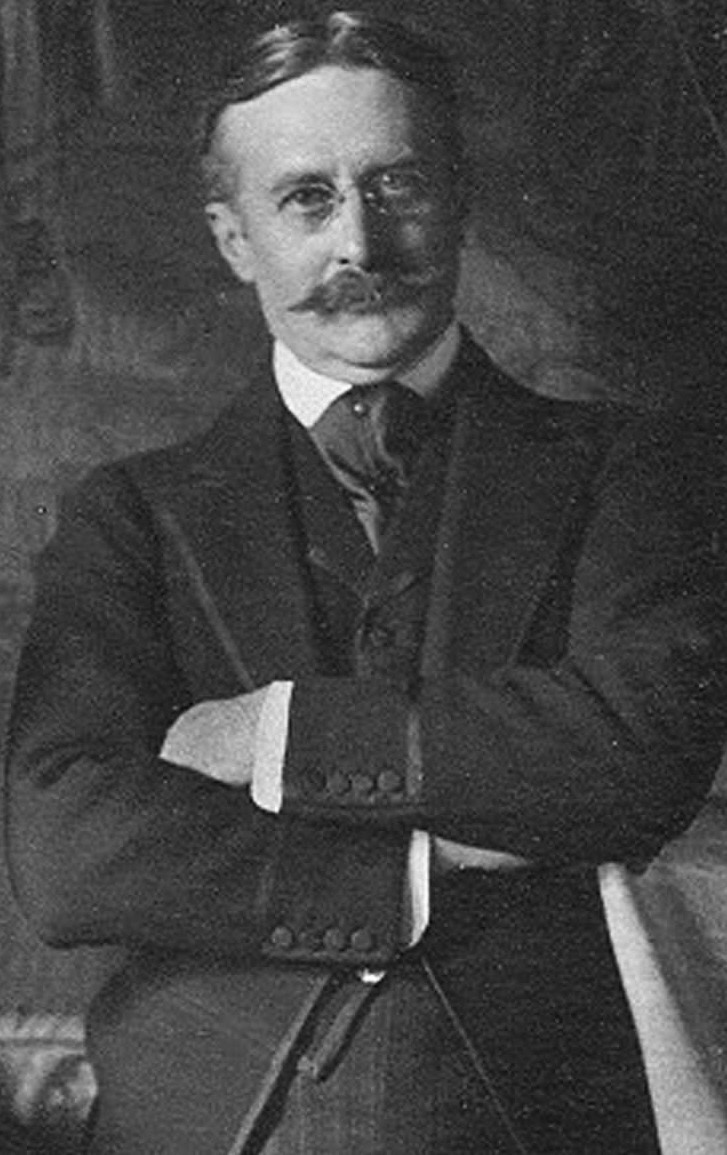
“…jump forward another ten years and he’s gone from an art student to an ambitious 33-year old already well established in London.”
Angus wrote that his father:
…was a Scot, and after school spent several years as an engineer on the Clyde and started Art School in his spare time. He graduated from Glasgow School of Art after he had served with Royal Flying Corps in WW1, during which time he had married Amelia Gartmann.
Well, I hate to nit-pick, but if I could I’d ask Uncle Angus about his timeline — because as far as I can see James was well set up in London, and married to a Londoner, well before the war.
Why? To begin with, Amelia’s first baby, James William MacGregor — Sonny — was born on June 15th 1912.
And Angus also wrote that his father:
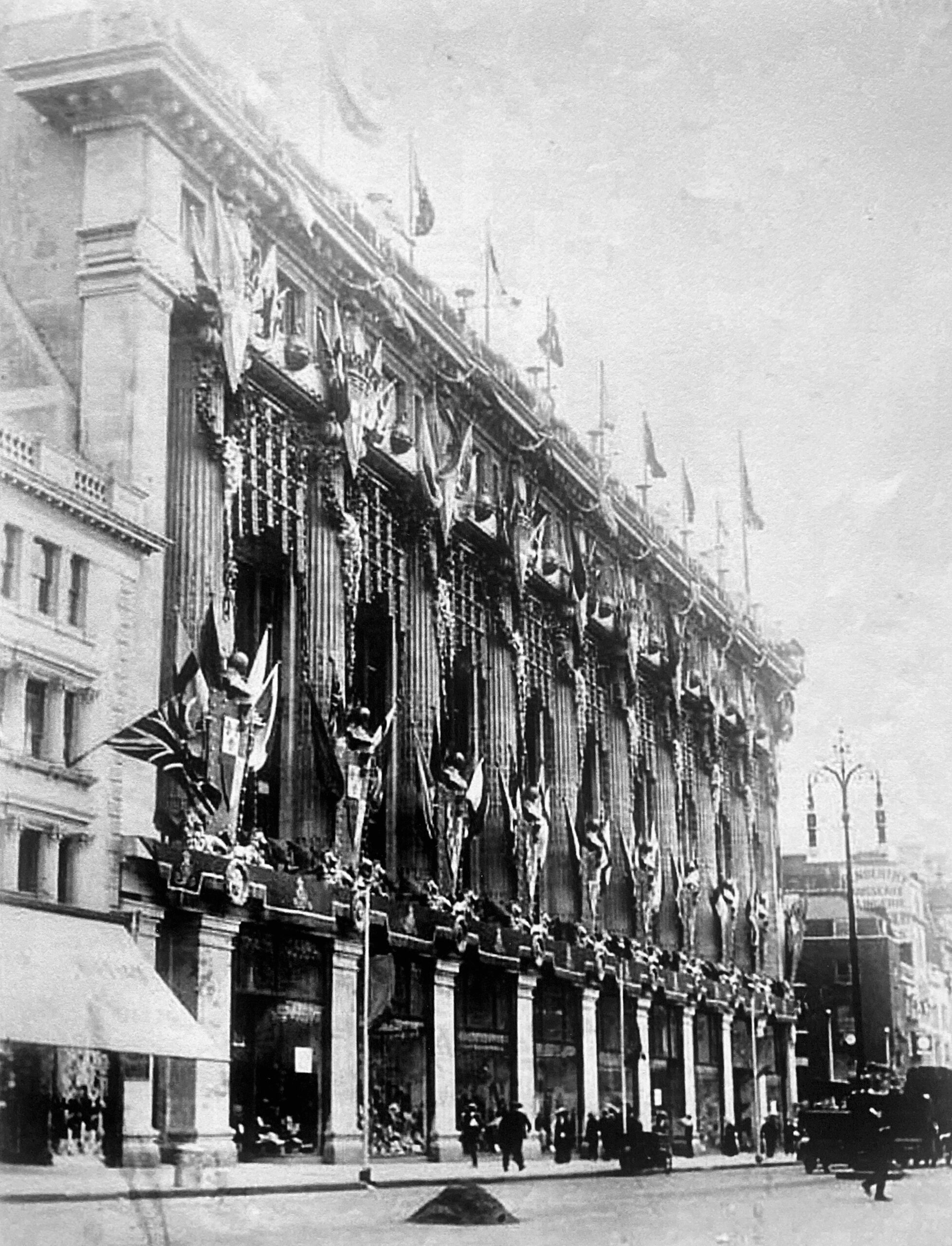
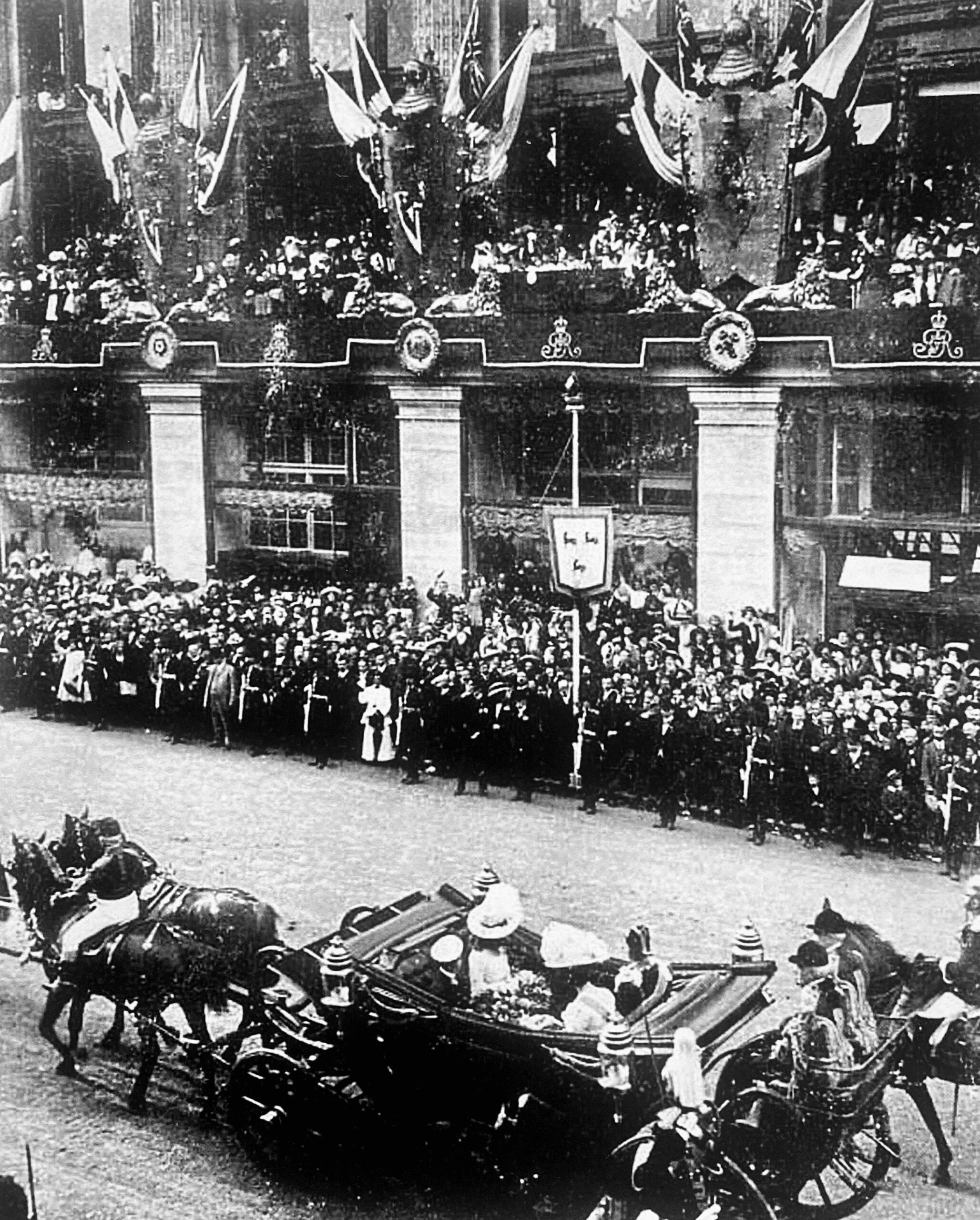
…had a great friendship with the American millionaire Gordon Selfridge, who built the famous London store that opened in 1909, and Dad was invited to do most of the window dressing, and also the design for the whole building’s decoration, in 1911 for King George V’s Coronation.
Put all that together and I think it’s safe to assume that Amelia and James were married some time in 1911, and by that time James must have been well enough established on the London scene to build a rewarding commercial relationship with the wealthy American, Harry Gordon Selfridge.
All comfortably pre-war.
§
Some things are clear enough. James was Scottish — loyal to Scotland — and he regaled his boys with tales of his escapades as a child around Stirling. According to Angus’s brother Douglas, he did at least part of an apprenticeship in Marine Engineering at D and W. Henderson’s shipyard at Meadowside on the Clyde, near Glasgow. And yet in the 1901 census, age 23, he was described as an “art student”, and according to both brothers he was studying at the Glasgow School of Art. Douglas reckons the marine apprenticeship was a seven year stint — so if he saw it through he must have started aged sixteen or younger. Not particularly unusual.
But then we jump forward another ten years and, with nothing new to hang a story on, he’s gone from art student to ambitious 33-year old, already well established as a commercial artist in London.
§
Those were my first impressions of Heather’s grandfather. As Douglas said, James was an artist with the soul of an engineer. Supported — like me I suppose — by indulgent parents.
It’s a pretty threadbare narrative for sure, and over those ten years 1901-1911 things get more obscure, because, as I wrote in the post about his Mum and Dad, questions arise about what may have been happening in young James’s life. Did his mother Maggie Linklater effectively disinherit her children — her son — by leaving Batterflatts and what amounts to £3-4m in today’s money to the Scottish church? Although Angus said he knew nothing about any of this until his sister Margaret died in 1995, Heather’s mother Joyce, who became very close to the family after she met and married Sonny, suspected there was a family secret long before that.
So, did Maggie Linklater simply believe it was her Christian duty to put church before family? Had James broken the church rules regarding sex before marriage? If so was it just a pre-marital dalliance? Or had a child been born? Given up for adoption?
All I can say with certainty is that James married Thomasina Bell in the Parish Church of High Bebington in the County of Chester on August 5th 1901, about ten years before his marriage to Amelia. And that, although I can’t find their marriage record, James’s daughter Maggie gave her son Duncan a family Bible with a written inscription memorialising the marriage in Scotland of James and Amelia.
How the first marriage ended, and what happened to Thomasina, I still don’t know. Obviously there’s more to uncover, but this — and the fact that James was present at his mother’s passing — suggests that there was some sort of familial resolution.
And finally, is the Batterflatts story and its aftermath true, at least in detail? The public record suggests that the property had been sold back in the late 1880s or early ’90s.
§
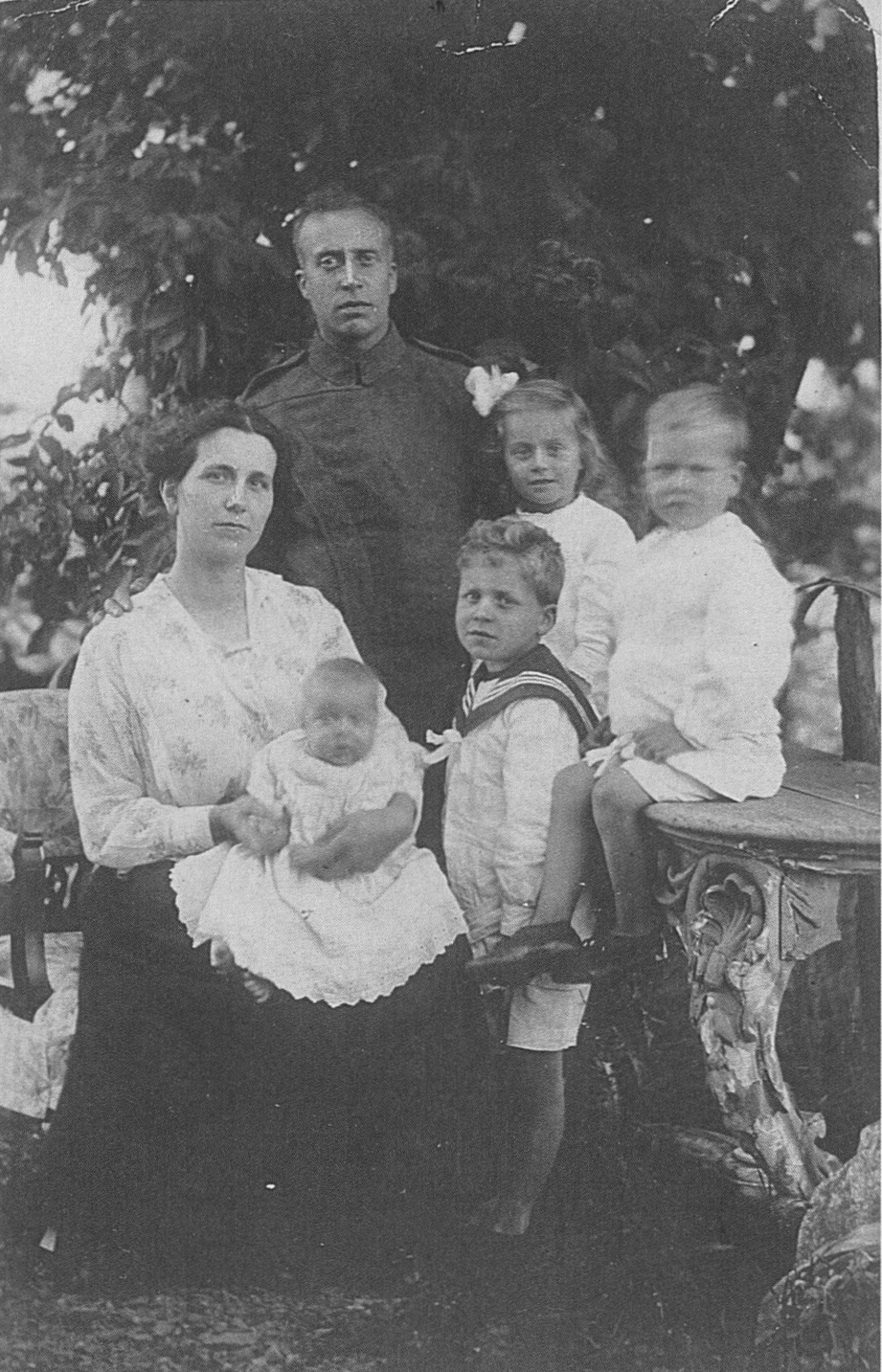
In any event, James fell on his feet in London, and established both a successful career and — with Amelia — what seems to have been an inordinately fortunate and happy family. I can’t add anything to Douglas and Angus’s accounts and their fulsome praise of their family life. It was a moving experience reading about a childhood so different from my own — relatively isolated, on a farm on the far side of the world, and in such a different time and place. But Douglas and Angus wrote largely about their home life, not James’s professional career.
§
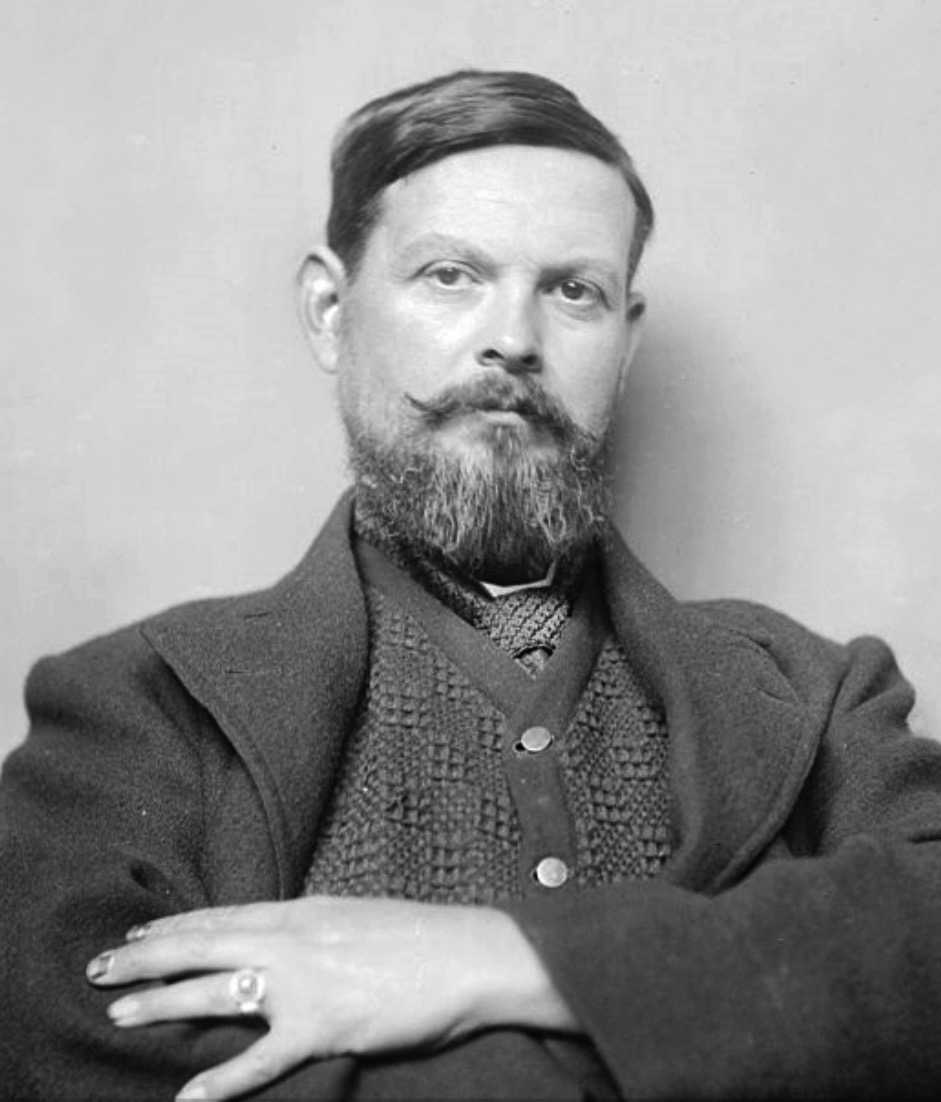
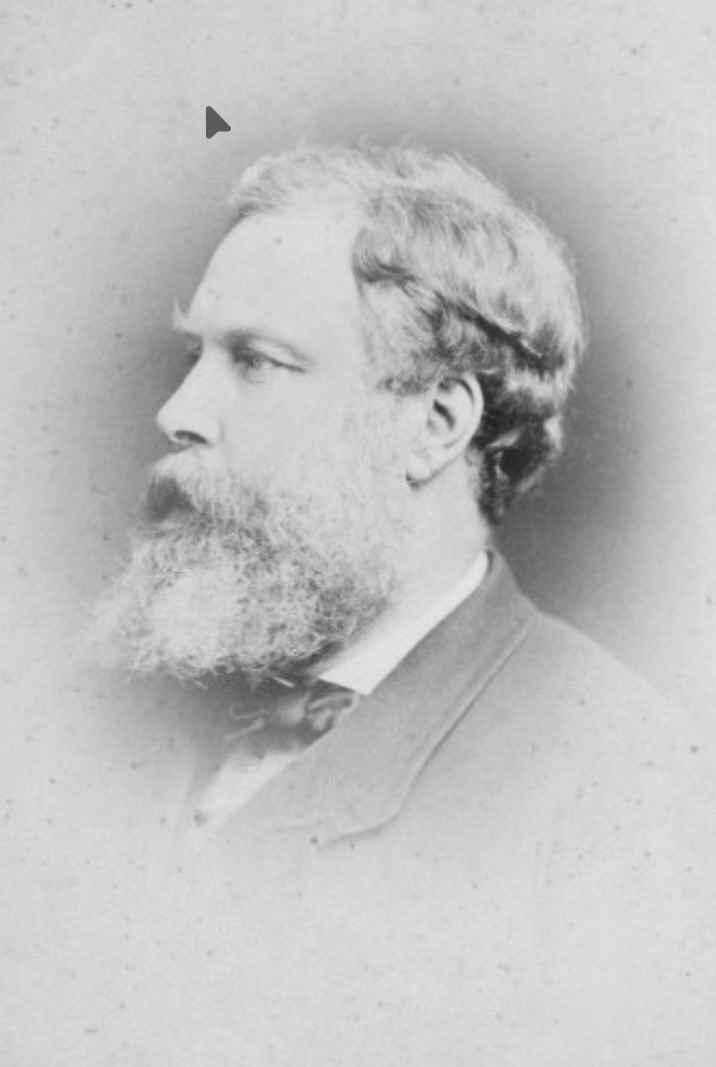
In London James came under the wings of two establishment artists, Frank Brangwyn and John Macallan Swan, both members of the Royal Academy, and the type you can imagine appealing to a young artist with an engineer’s soul.
Frank Brangwyn was incredibly prolific. According to Wikipedia he produced designs for stained glass, furniture, ceramics, glass tableware, mosaics, buildings and interiors — he was famous for his colourful murals. He was also a lithographer, woodcutter and book illustrator. Like his own mentor, William Morris, he wanted to bring art into everyday life.
John Swan was famous for his oils and water colours of wild animals, particularly felines. He also worked as a sculptor.
Both these men were commercially successful, and that too would have appealed to the younger man, whose career in fact turned out to be in commercial rather than fine art.
As an ironic note to illustrate how the world has changed, Swan collapsed and died in February 1910 while working on a “colossal monumental bust” of Cecil Rhodes.
§
I don’t know when he established his studio on Carey Street, at 7 New Court, Lincolns Inn. It was an excellent address from a business point of view, central and prestigious, although it might have seemed a bit less desirable when a German Zeppelin dropped a bomb a few blocks away in December 1917. The Zeppelins caused nothing like the devastation of the WW2 Blitz, but about 500 Londoners were killed. It must have been a sizeable space when you think of the projects he worked on, like the thirty paintings for George VI’s Coronation.
I’ve found no record of James’s own wartime service except family stories and two photographs of him in uniform — he was apparently in the Flying Corps. They’re the only photos I’ve seen of him as a young man. They give the impression of someone in command of the image he projects, proud and self-contained. No telling him to smile for the camera.
§
Those were the years when the written word began yielding to visual and oral communication in “broadcast” popular culture. Moving pictures, radio and recorded music were appearing, and so were photography and graphic illustrations in the press. The Illustrated Weekly News had been the first news magazine to print images in 1842, but by the early 20th Century they were becoming widespread, and this was well suited to James’s talents. The June 1925 of The Hippodrome (“an Illustrated English, American and Continental Magazine”) found, in the Sketch1 and Pearson’s Magazine2, the “firm drawing and intuitive imagination that pervade all his work.”
This was also an age of enthusiastic decorative display, fuelled by everything from love of Empire, to George V’s coronation, to trends in art and the retail vision of Harry Selfridge. The Hippodrome found plenty of evidence for James T. Sharpe’s “broad mind and originality of idea and serious temperament for colour”, his “keen knowledge of the artistic as applied to commercial enterprise” and his “thorough appreciation of colour and dignity.”
Argue if you like with The Hippodrome’s judgment3, but there’s no debate that James was at the top of his game, based simply on the range of work evidenced in that one brief review, from magazines to decorative panels on important buildings, to commissions from one of the railway companies, to the beginning of his decades-long involvement with Selfridge’s.
They round out their text with three equally diverse photographs. The first is of the work he did at Selfridge’s for the 1911 Coronation of King George V, Elizabeth II’s grandfather, described above.
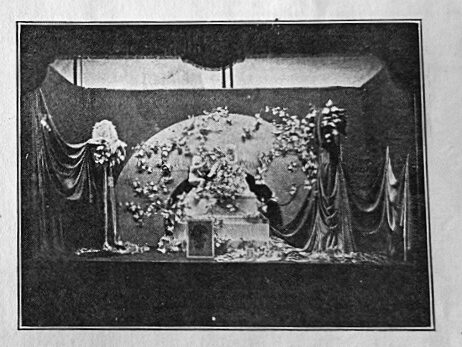
The second is a Selfridge’s window display — “with its delicious blossoms and dainty figures — symbolic of youth”. I wish the print technology of the day was good enough to appreciate the “scenic artistry” of those windows — art that’s almost as ephemeral as a chef’s meal.
Compare the detail in the two interior photos4 below, showing Ladies Dresses and the China Dept in 1909, the year the store opened.
§
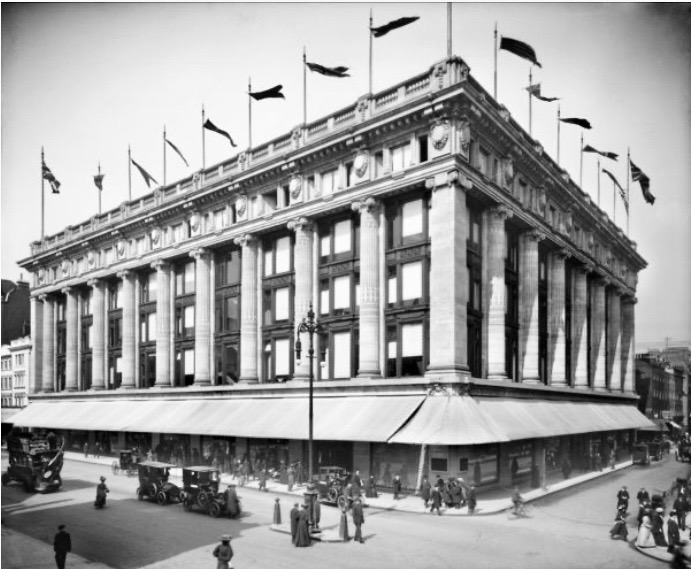
Selfridges in 1909: On the exterior the public saw “a classical front of unprecedented audacity and swagger”5, on the inside a dignified public space where Edwardian ladies could comfortably and legitimately indulge themselves.
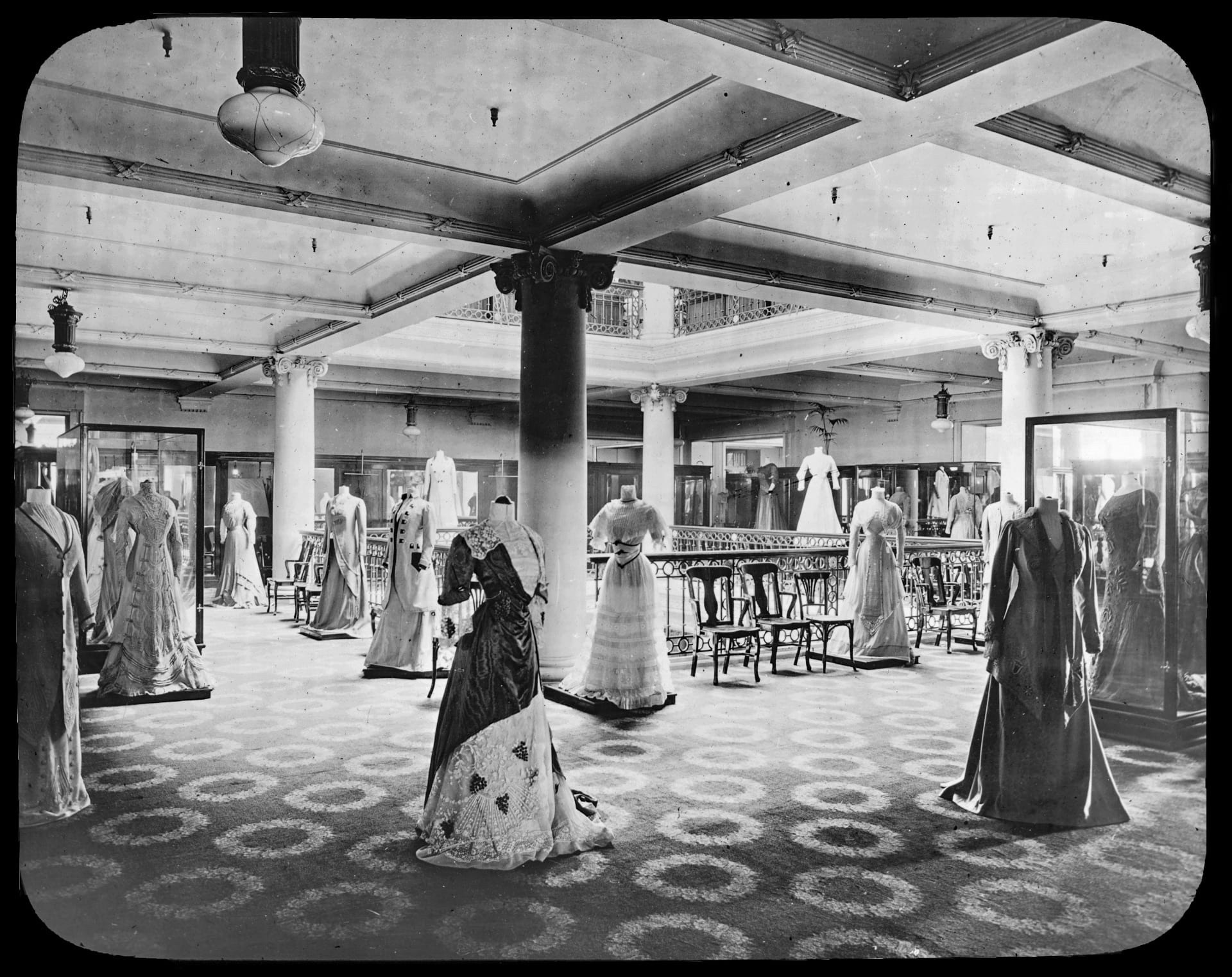
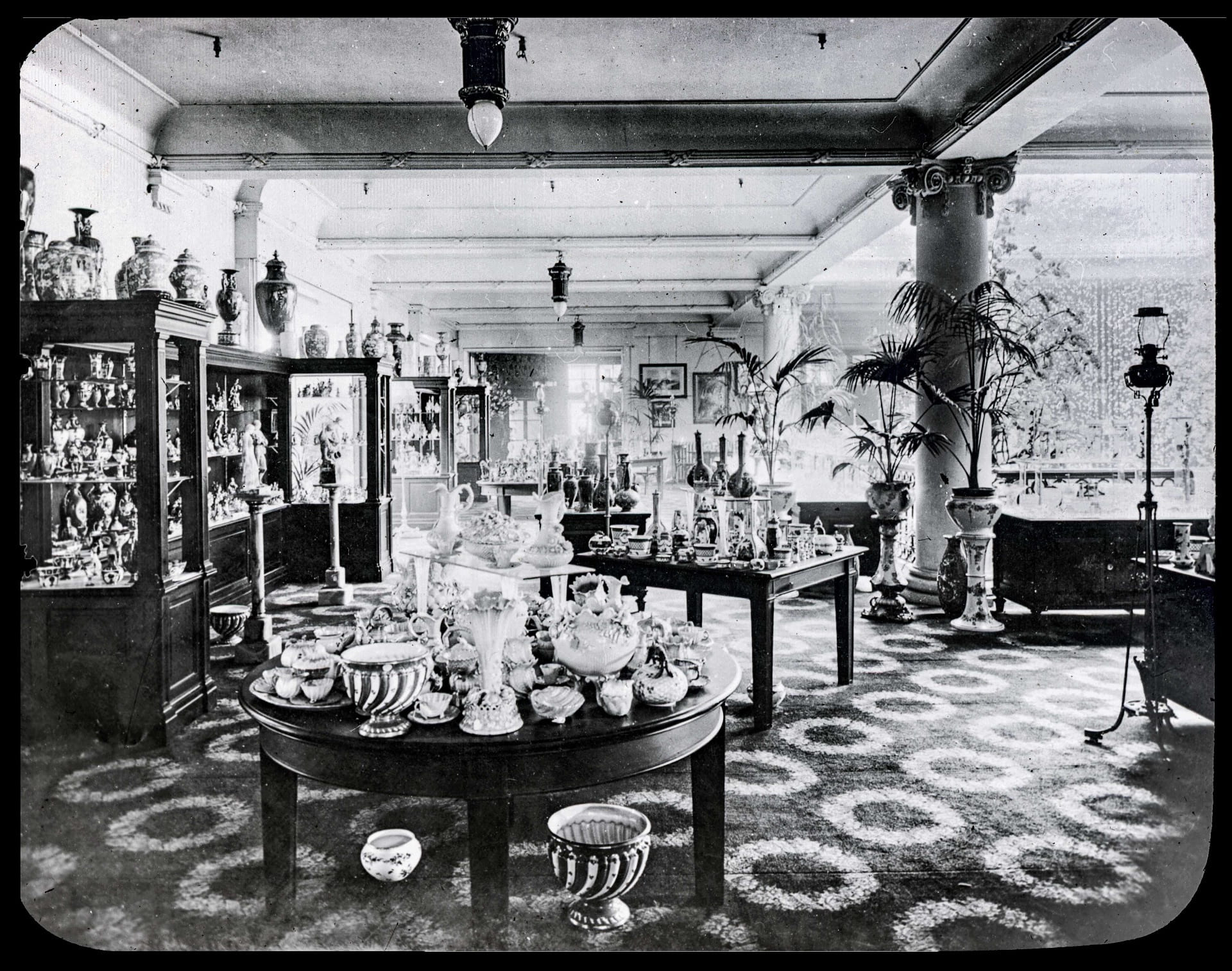
How much of this was James’s doing? Without job descriptions and inside information who can know? But since Gordon Selfridge was a man who surrounded himself with good people, and James worked with him for at least eighteen years, and according to the family they were good friends, my bet is that his contribution was significant.
§
§
Of The Hippodrome‘s three photos of James’s work I like the third best — an equally disappointing reproduction of one of James’s pictures, The Mask, about which it says “…the delicate colouring and exquisite harmonies — the colours are superbly balanced — offer fine contrast to the flesh tones.” That’s easier to confirm, as we’ve had a print on our walls for most of our married life.
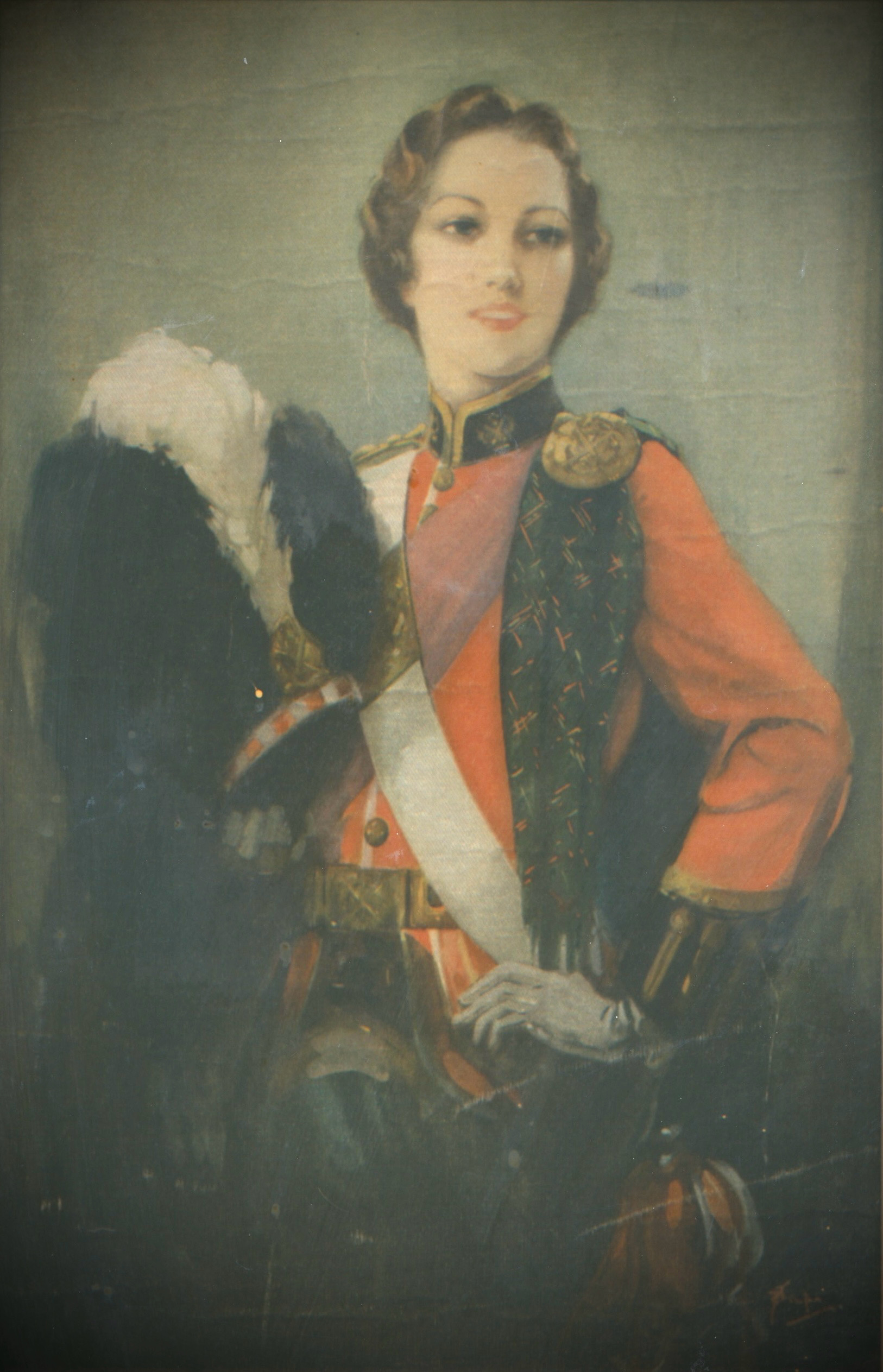
But I’ll get to James’s painting later. For now, I wish we had more of James’s commercial work, but all we can lay claim to is another framed print, of a girl dressed in full Scots regalia that we understood was painted for a Scotch Whisky company.
My reproduction doesn’t do it justice, so I went online looking for something better. All I could find was an image on a dealer gallery’s site that’s identical down to the signature (James’s) but credited to a different, younger man.
Make of that what you will.
§
“The Empire’s Homage to the Throne”
Selfridge’s decorations for the 1937 Coronation of George VI, Queen Elizabeth’s father, were even more grand than in 1911. That’s partly because the building itself had been massively enlarged — it now extended along Oxford Street for the entire block between Duke and Orchard Streets, almost three times its original 1909 frontage.
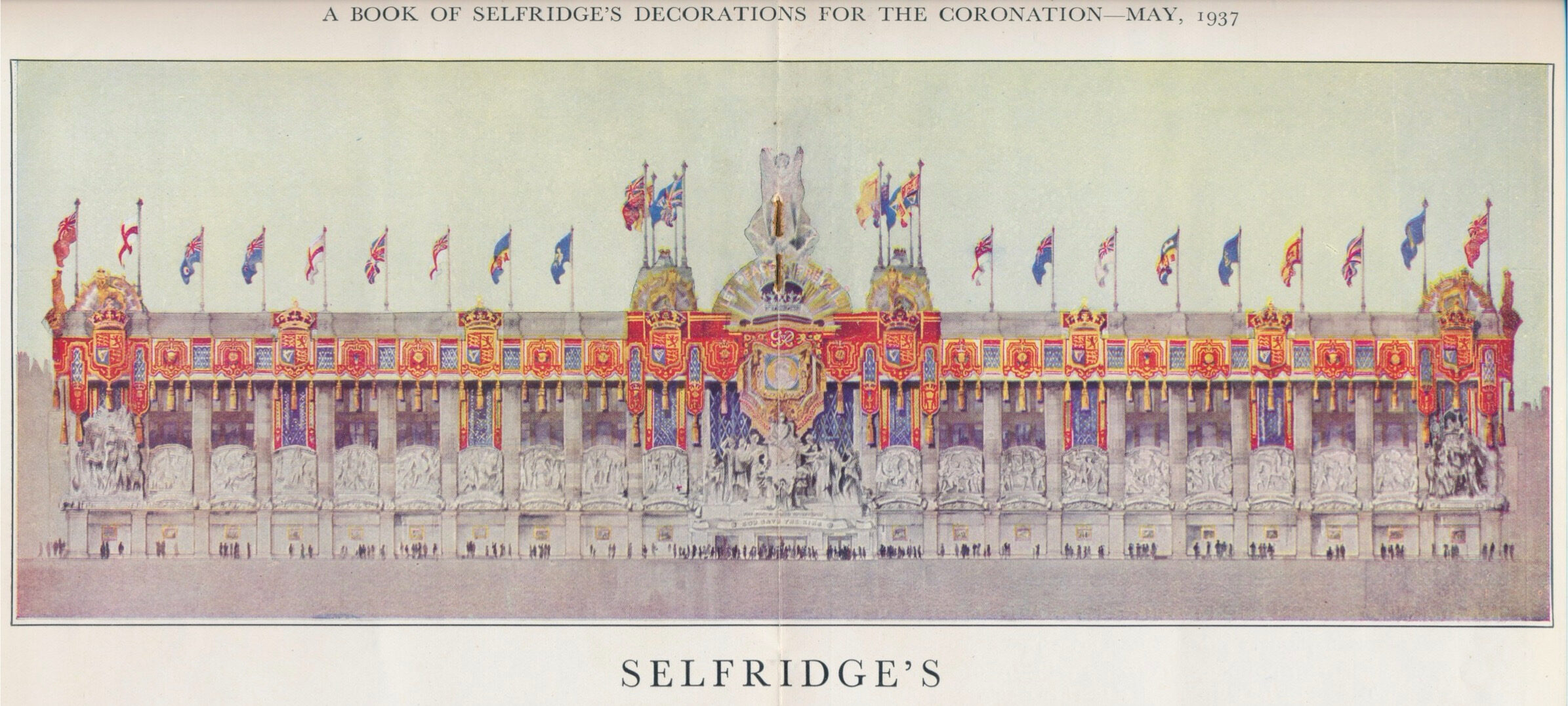
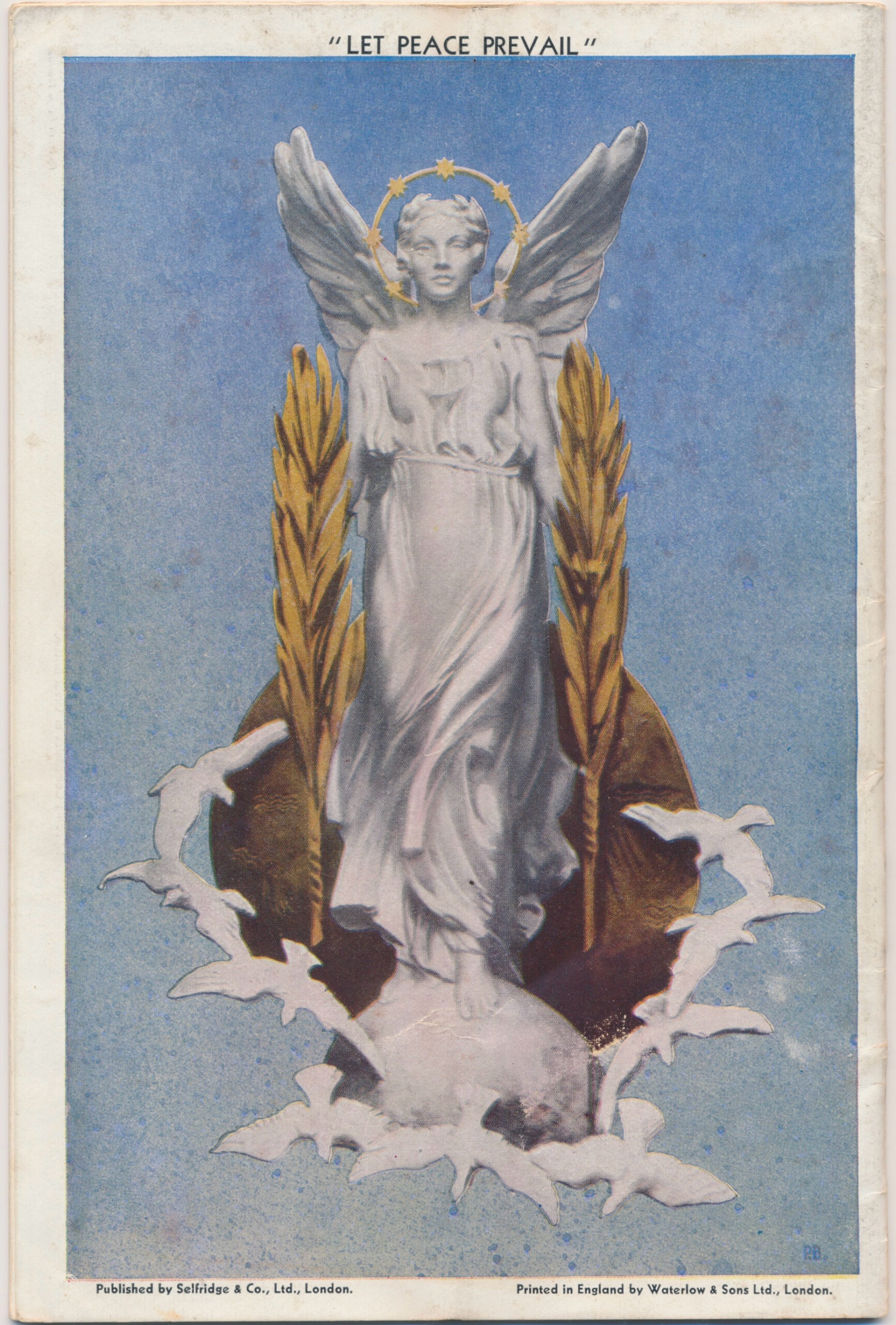
“The figure of Peace (” Let Peace Prevail “), surmounting the gold and silver sunburst, ascends to about 150 feet from the pavement and appears to overlook the entire scheme.
“Along the roof level, where the Empire Flags are flying, will be seen the great Crown and Canopy emphasising the Royal Medallion in the centre and on each side are the Royal Lions and Crowns which, with the Standard Shields, become part of the pelmet stretching from end to end of the building.
“Beneath the Royal Medallion is the great central group, entitled “The Empire’s Homage to the Throne.” This central composition is supported on the right and left by 18 historic panels, terminating in the corner groups.
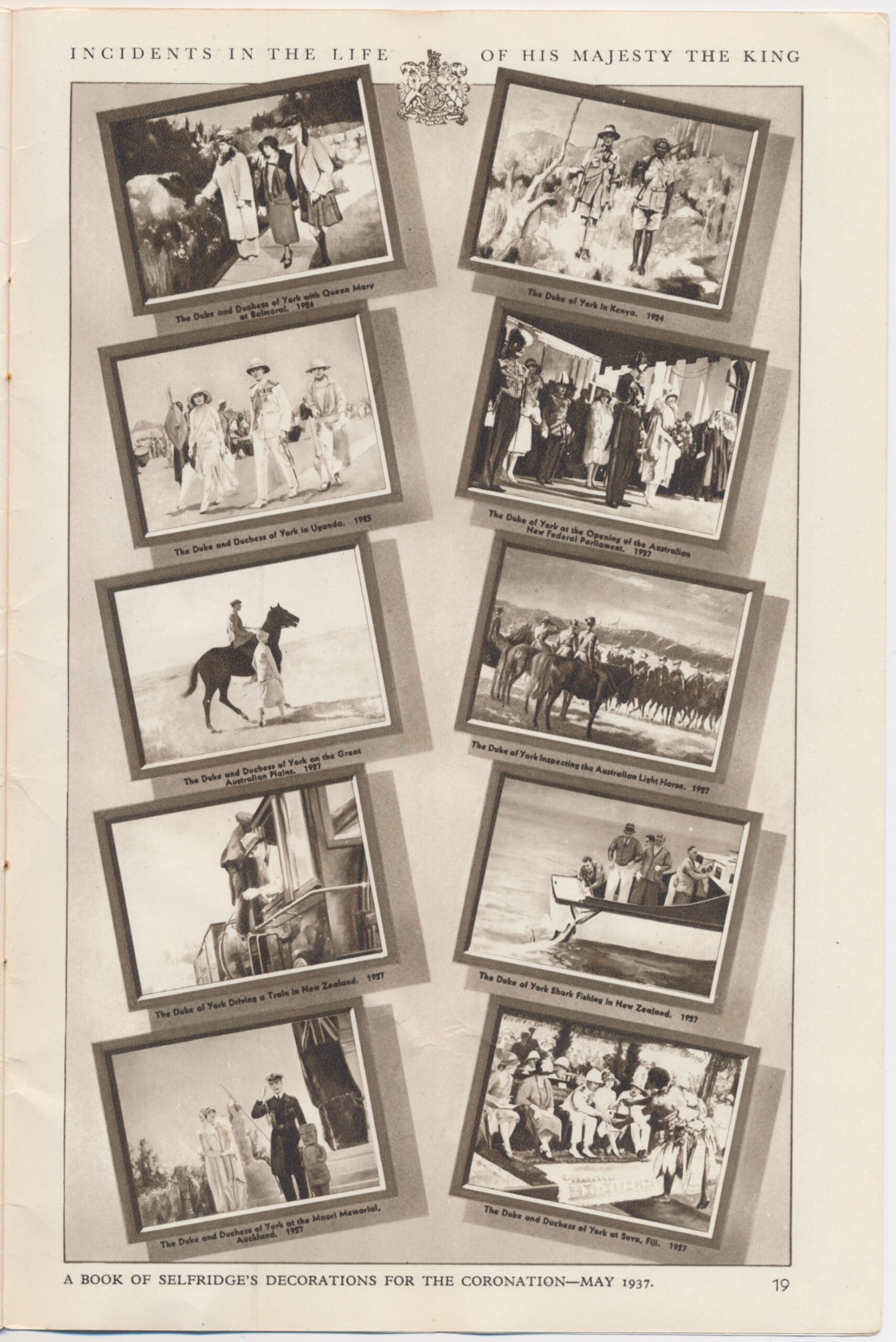
“Finally, in each of the large windows is a picture in oils showing an incident in the life of His Majesty.
“GOD SAVE THE KING.“
The page of credits for the “decorations” is a who’s who of contributors. Albert D. Millar, Architect, was Controller of the Entire Decorations, and Professor Sir Ernest Stern was Chief of Design. Mr Millar had been “London Manager” for one of the American architectural consultants. I can find no mention online of Professor Stern. However, we all know that the men on the masthead don’t actually do much of the work, so I’m happy to continue pushing James’s case.
His credit is in small print near the bottom of the page:
In the Show Windows, the thirty paintings of incidents in the life of the Sovereign are by J. T. SHARPE.6
In the A5-sized 20-page, full colour, commemorative booklet published by Selfridges (price 3d) James’s 30 paintings rated 3 pages in sepia. I doubt that James would have called them his best work, but at 8’x6’ (2.4×1.8m) each they may have been his largest. New Zealand gets three mentions, in paintings showing the Duke of York (soon to be King) driving a train, shark fishing, and with the Duchess at the Maori Memorial, Auckland.
But these paintings can’t compete for pathos with the great symbolic figure of Peace by Gilbert Bayes, Vice-President, R.B.S., less than 2-1/2 years before Neville Chamberlain declared that Britain was again at war with Germany.
§
The entire coronation project must feel like it’s from another world to our kids, and, as we’ll see, it seems very different too from James’s private and family life.
§
James’s studio was at 7 New Court, Lincoln’s Inn, London — an address well chosen to signify establishment success. New Court was a 5-6 storey gothic office building on Carey Street that housed mainly solicitors and barristers. One sunny tourist day, walking down Farringdon Street from the Old Bailey to our destination restaurant in Exmouth Market, Heather and I were crossing Clerkenwell Road when she said that if we took a left turn we could visit the place where her Grandad had worked. But it was quite a step, and lunch called, which is a good thing as the buildings were demolished in the 1970s.
Footnotes
- The Sketch was a British illustrated weekly journal published from 1893 to 1959, focusing on high society, theatre, and the arts. Notable for featuring early works by Agatha Christie, it included high photographic content and regular features on royalty and aristocracy.
↩︎ - Pearson’s Magazine was a British monthly periodical published from 1896 to 1939, known for its speculative literature, political discussions, and contributions from notable authors like H.G. Wells and George Bernard Shaw. It featured the first British crossword puzzle in 1922.
↩︎ - The cover of the June ‘25 issue seems to be an advertisement for pedigree livestock. Even after 25 years of publication the English Hippodrome appears to have dropped out of even the internet’s memory, although an American magazine/edition has not.
↩︎ - From glass slides acquired by the Survey of London
↩︎ - Survey of London
↩︎ - They were no small achievement. Edward VIII abdicated on December 11 1936, and George VI was crowned on May 12 1937. That’s 30 8×6 paintings to produce for 30 shop windows in five months. In fact he’d probably completed 30 others for Edward, and at short notice needed to redo them. His daughter Dorothy said they had to re-stretch the canvases. The kids probably helped paint them as well. ↩︎