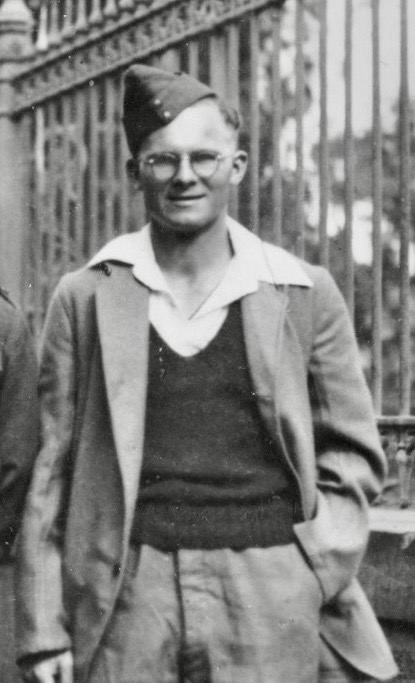
I’ve felt a bit uneasy building a narrative out of Dad‘s 1943 diary and his letters to Mum, and then putting his name to it rather than mine.
Dad eventually wrote about it himself, but it was late in life (after we came back from Italy in 1994) and he left the text muddled and disjointed — and anyway it was based on the same sources apart from a few good yarns that he added. This particular chapter is definitely my take on it — the outlook of the men of 2NZEF through the eyes of one of them.
As I read his letters I thought of the censors who’d read them before me.1 The officers. The men’s letters home were one way to assess their state of mind, and many would have echoed Dad’s state of discontent. ~ Ian
§
The men who arrived back at Maadi in June 1943 were victorious but war weary. War weary and often resentful.
Cliff put together an album of wartime photos, but it peters out after a few pictures he took on leave in Alexandria after the trek back from Tunisia. He wrote in it, “Sick of the war, I took no photos in Italy…” Sick of the war, and yet it would be another two years before he could marry Dorothy, and five months after that before he got his discharge papers.
§
He arrived back in Alex a changed man. He’d enlisted as an almost puritanical young Methodist lay preacher, and found it hard to mix with foulmouthed boozers. He came to judge them differently, but when he was wounded in late 1941 he still told the doctor he didn’t drink, although he did smoke a bit.
But his short temper was nothing new. He mentioned it himself as far back as Sidi Rezegh, where George Darroch, his offsider, got it in the neck for his “incompetence”. Cliff was a dab hand with all sorts of useful skills after the best part of ten years working on farms and down mines, whereas poor George, obviously a decent bloke, was a townie linotype operator who couldn’t drive a truck, light a primus or send and receive morse code well enough to please Cliff. As someone who’s been on the receiving end I know how it feels, and apparently it runs in the family.
But it was more than that. He was assertive to the point of insubordination. There’s the time he put their officer right on a navigation exercise, the time he pulled up Brigadier Clifton on a dangerous training manoeuvre, the time he let Brigadier Gentry know loudly that the men needed a break for a brew-up and a cup of tea. And the several episodes where he and the other stroppy Kiwis told British officers where to get off. Maybe he was hard to live with among the men too — hundreds and thousands of them travelling together, living, eating and working together for months on end. Hot, dusty and dirty, drab food, boredom and intermittent fearful danger.
He badly wanted promotion but ended the war as he began it, a Signalman. I think his short fuse explains that in part. That and the fact he was very good at his job. I take him at his word that he was better than some of those around him who did get their stripes. He was certainly very capable — the coal-miner’s son who got a steady job in the P&T and then, variously, was a self-employed butcher, a farmer, a retailer in his working life. And he ran for council, spent years in productive local and national politics, and more years still as a Justice of the Peace. But that sense of frustration, impatience and short temper was always with him, ready to surface. It had been there since he was a kid, and five years of wartime engrained it.
§
And then there was the grog. It was going into action with these men — the front line infantry — that changed his frame of reference.
There was the time in Palestine in ’42 when he and his mate John got legless with the Highland Division men, and John lost his false teeth and Cliff his glasses. And the regular drinking once they got to Tripoli, when the men came up against the wine drinking culture of the Italians. Some of them, at least, felt free to ransack the cellars.
One February day in Tripoli, when they were billeted in the Governor’s Palace, his friend Wally came to see him:
There was wine to burn and much fun. A winery is quite handy and we help ourselves. We got 25 gallons on Tuesday morning and there was little left on Wednesday morning. It was Ron’s birthday so we had a drop to celebrate the birthday and my MM. Wally had a drop also. We loaded him onto a truck that called to pick him up at a late hour…
Next morning there was a message to all ranks from Brigadier Gentry:
As Brigadier in command of 6 New Zealand Brigade I’m entitled to get at least six hours sleep a night and in future I’m going to get it.
Cliff was becoming an alcoholic, or so he thought. He was smoking too. After the war he swore off the drink but not the smokes. There was never beer at our place except for haymaking. There was a pub at Hikurangi but he never visited except on Anzac Day. In retirement he’d have a tipple of sweet sherry, bought by the half gallon flagon from the local wine shop, as was the custom of our fathers back in the day. Never for us — good grief no.
§
And there was widespread resentment, which showed its face in various ways. After another L section party, “Only one man remained sober, our Sergeant. Not a popular man and too keen for promotion. He was fast asleep with his gear neatly laid out by his bed and his boots neatly placed at the foot. One or two blokes, I can’t be sure how many, took turns to piss in them.”
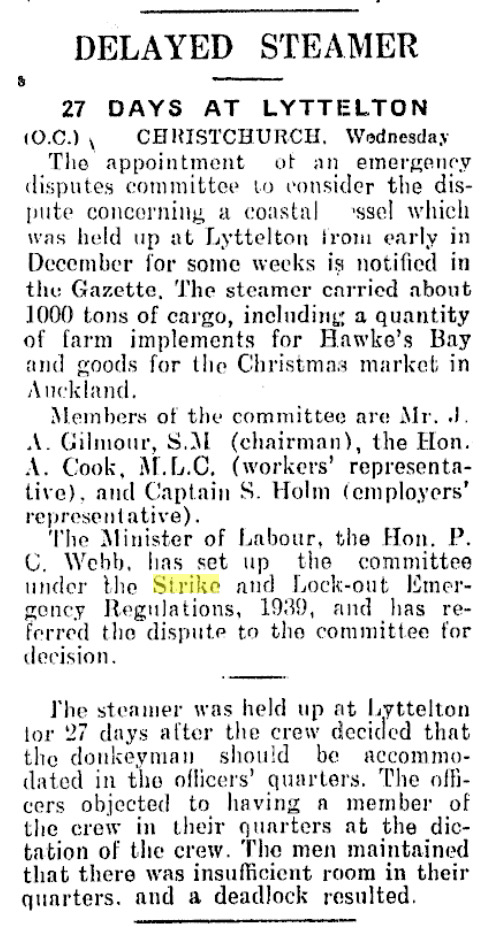
When he was working down at the wharves with 24 Bn that February there were three air raids:
We don’t bother to go to the air raid shelters, which are just outside. The battalion still works day and night on the wharves, and the wharves and ships are the target, only a short distance away. The shelter wouldn’t hold many of us in any case.
“At this time the watersiders were on strike for danger money because they were unloading ammunition. Our boys, being bombed almost nightly, were unloading ammunition for seven shillings a day.”
I suspect that particular strike was in Australia. Certainly, on the Sydney docks in early April 3000 soldiers were unloading and despatching “supplies for the battle zones” while 4000 watersiders were on strike. But that didn’t matter. The papers had plenty of stories about unions, strikes and hold-ups — watersiders, railway men, freezing works, marine and the like. In Australia, Britain and New Zealand.
At a school reunion many years after the war I met a New Zealand wharfie of that time and told him he would’ve been shot if we had been close enough. He said, Well, we didn’t want a war. Such people disgust me. XXX, a relation and former waterside worker’s delegate, has had several overseas trips since he retired. On being asked how he could afford it he said, “Oh, I made a lot of money during the war.“
Resentment was widespread. Cliff had served two years by the time he arrived back at Maadi, plus his time in training. And by the time he and his cohort arrived in the Middle East many of the men had already fought campaigns in Greece and Crete. Here they were, doing it hard and getting shot up in the desert, and those bastards at home were grizzling about their lot.
Add to that the feeling among the Australians and New Zealanders that they were in a sense expendable — taking heavy casualties to prioritise political and strategic wins for Churchill and the British Command. The cost of infantry assaults to create openings for British armour, for example, was so great that in the end Freyberg refused to commit troops unless the armour was under his own command.
§
One consequence of these resentments was the so-called Furlough Mutiny. Cliff had described “very good news” when they returned to Maadi — that the married and some single men who’d been overseas the longest were to return home for a three-month furlough. But when they arrived many of them were furious at the number of “reserved occupations” exempting men from military service2, and the bonuses and high wages being paid to munitions workers. Of the 6000 men who returned many of them refused to go back. Some were exempted, including married soldiers with children, all men over 41, and Māori.
In addition, more than 2500 of the draft were found medically unfit for further service. But just over 1600 faced a return to the front. More than 500 of these refused the order and were found guilty of desertion, a verdict that was later quashed. As with other controversial issues, much of what people learned at the time was hearsay. Full information about the ‘mutiny’ never reached the public because censorship kept the details under wraps.3
This became a problem in Italy, where the Div fought with lower morale and without many of its most experienced troops.
§
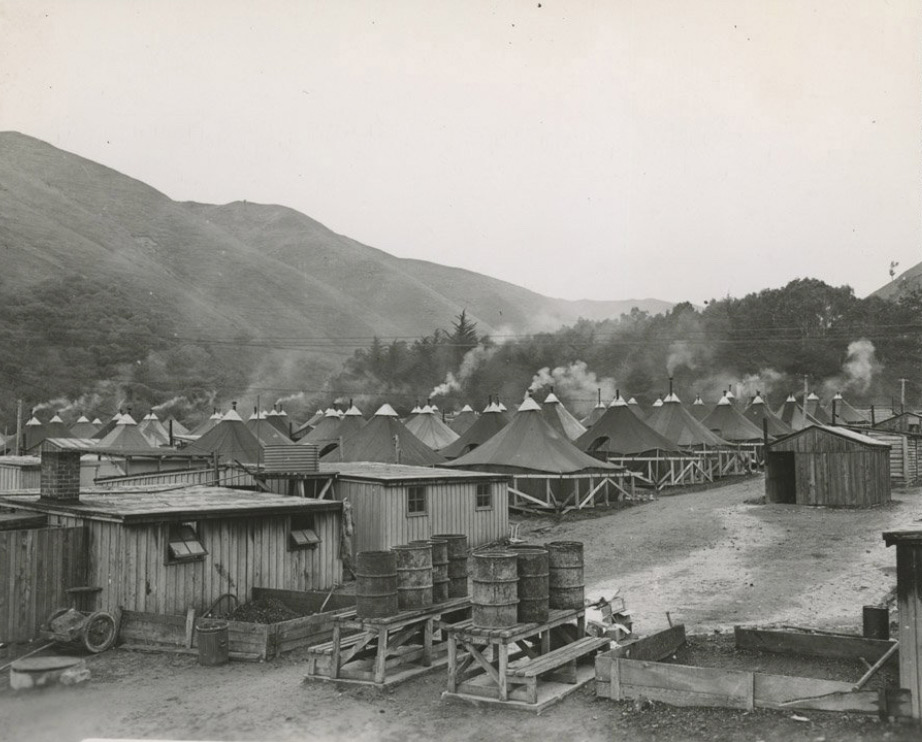
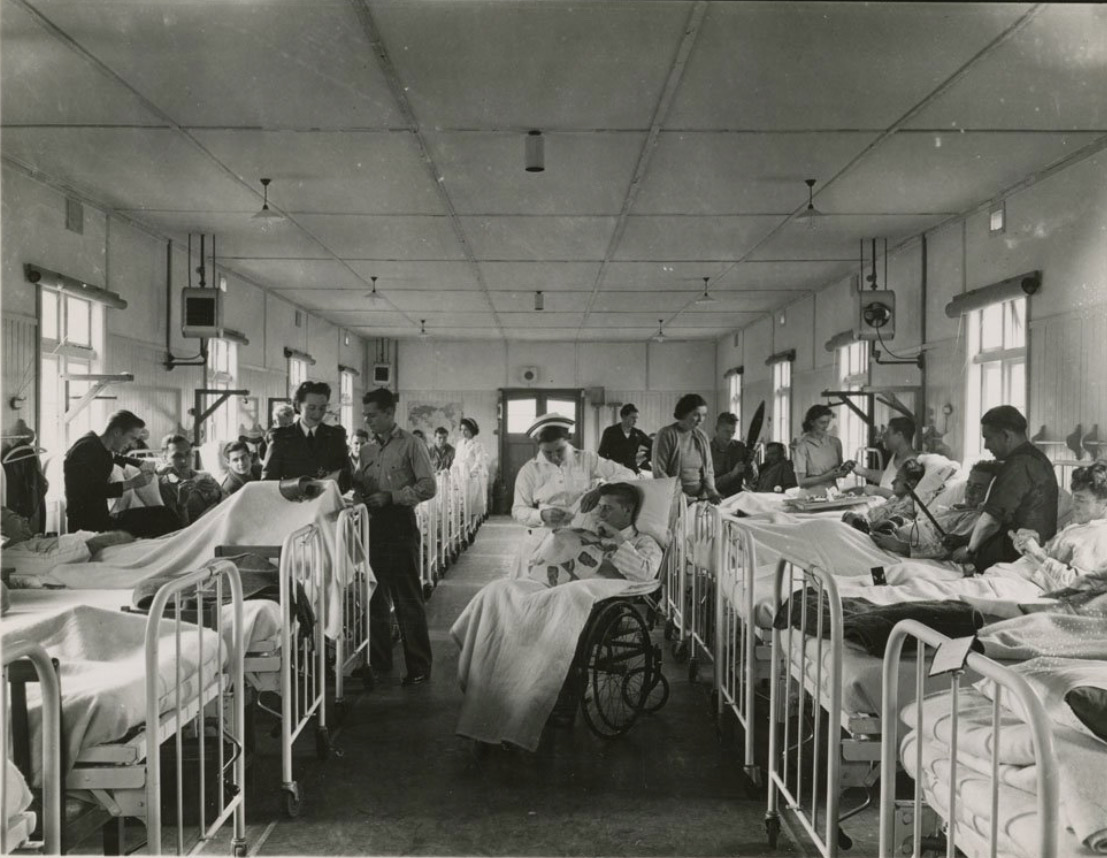
And there was another layer, the Americans. On any day during the two years from June 1942, there would have been between 15,000 and 45,000 American soldiers and sailors based in New Zealand, either before or after their service in the Pacific. Some were hospitalised, as in the hospital built for them at Silverstream, where I worked in the 1960s. But most were there for rest and recovery from the rigours of the war.
There were efforts by both sides encouraging people how to behave, or explaining their sensibilities. For example, “Be friendly and sympathetic towards the coloured American troops – but remember that they are not accustomed in their own country to close and intimate relationships with white people.”
Fair to say that worked both ways — that white people weren’t accustomed to close and intimate relationships with black people. A major cause of the Battle of Manners Street in Wellington on April 3rd 19434 was racial — when Americans took off their brass-buckled belts to attack those who wanted to let Māori into the Allied Services Club, and things escalated from there. Like the Furlough Mutiny, this was hushed up and minimised for years. Up to a thousand soldiers and several hundred civilians rioted on the street and through central Wellington, until the brawling was halted by the military police, fatigue and the Americans needing to catch the last train back to Camp McKay.
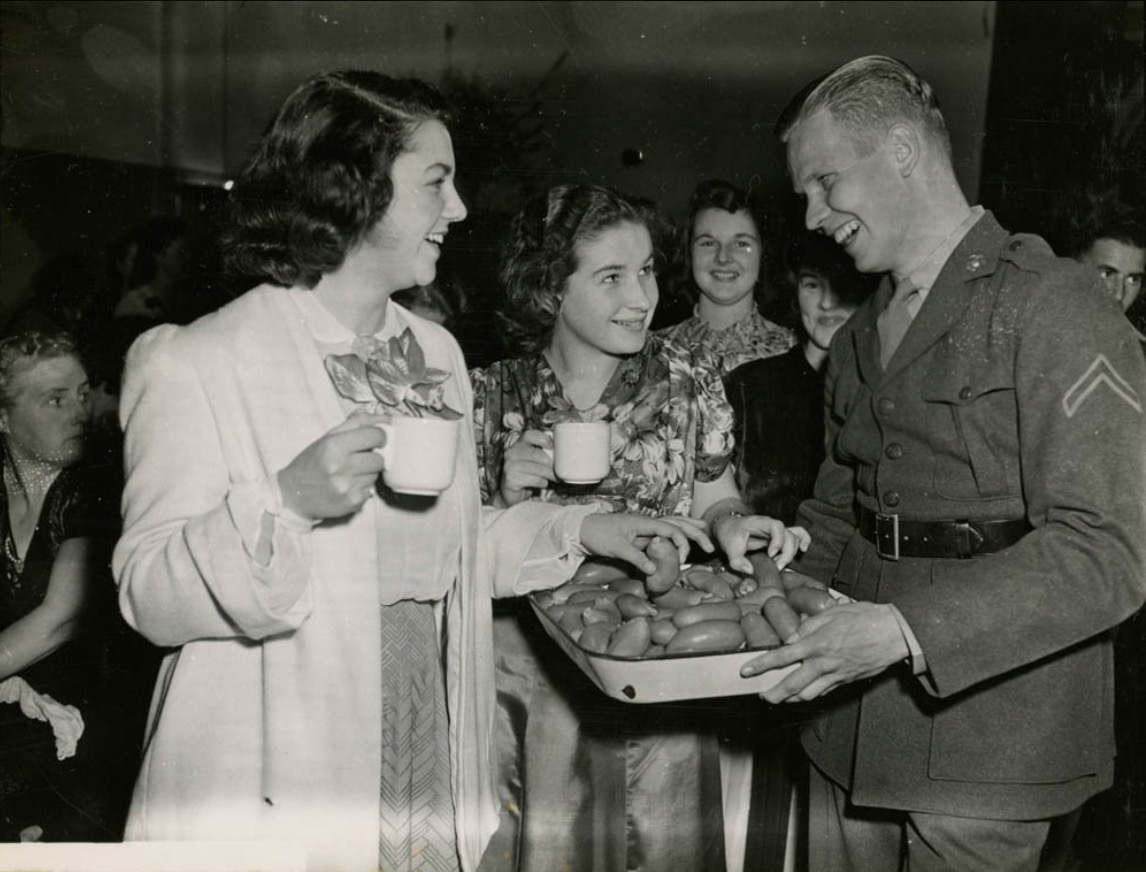
There were other disturbances, but by and large the Americans were polite and friendly, which was itself part of the problem. Young women found them good company. They bought the girls flowers and they had more money than the locals. The old expression held in New Zealand too — the Yanks were oversexed, overpaid and over here. Or from the viewpoint of the 2NZEF soldiers, “over there”. There were 1500 marriages between American servicemen and New Zealand women.
And to top it all, of course, Cliff reckoned they’d bombed the Kiwis on several occasions. Nor did he like how they spent their soldiers’ lives so freely.
All his life he called them Yanks.
§
Which takes us down another layer, to the men overseas and the women back home, to engagements called off and marriages ended, often with devastating effects. I’ve alluded to a few of them, and Cliff was certain it led to the death of his best childhood friend.
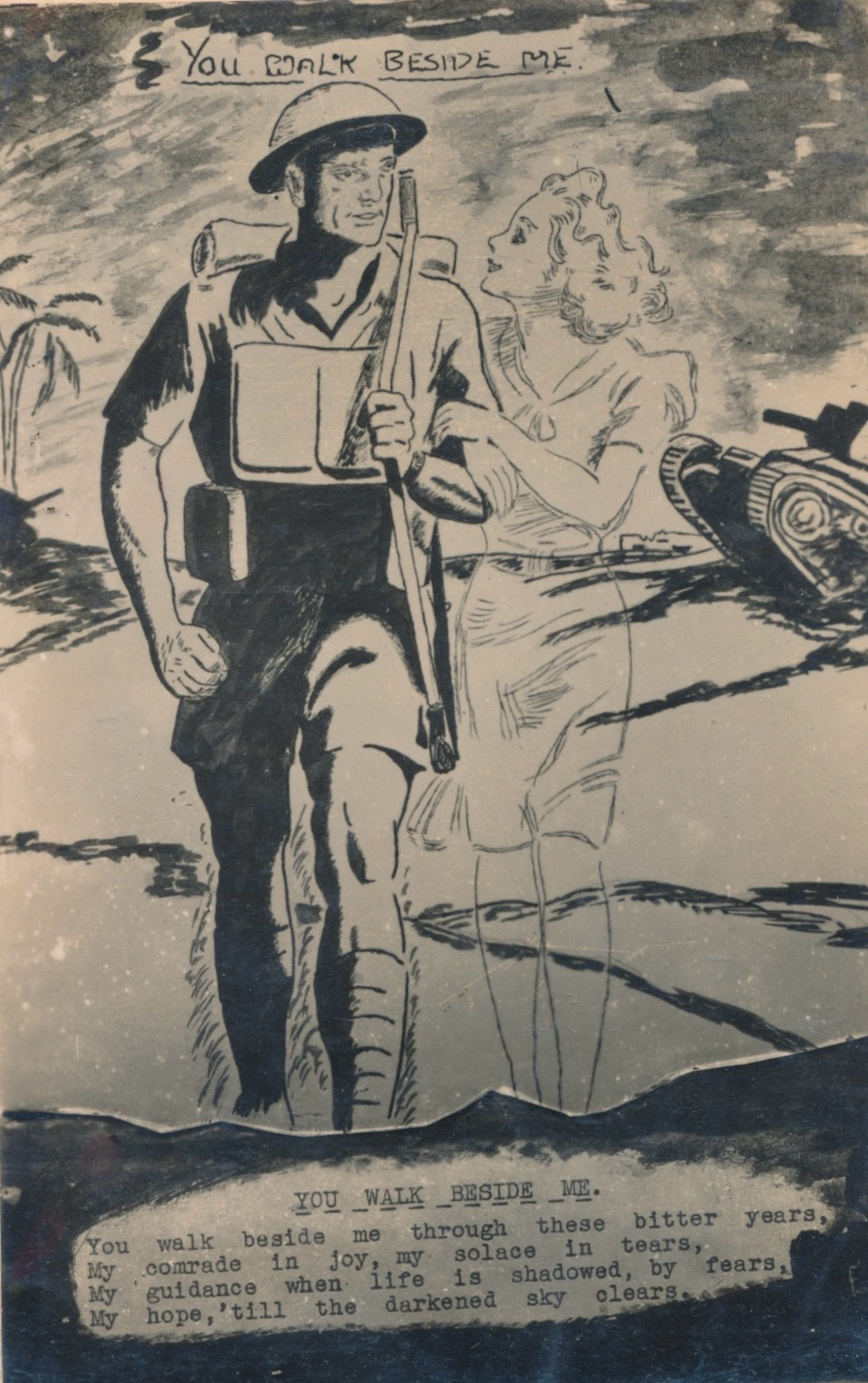
On 26th February, a couple of days before returning to Brigadier Gentry’s HQ, he wrote:
I hope you aren’t feeling as lonesome as I am, sweetheart. It is a terrible feeling. I am in that mood where I’m just longing for a bit of love, sympathy and understanding. If you made a miraculous appearance here, I’m sure I would cry on your shoulder, and perhaps you would wonder what on earth was wrong with me… I guess men weren’t made to do without women and I suppose vice versa.
If that sounds a bit pathetic, try and put yourself in his shoes. He loved her, he knew there were young men around her, he worried she’d fall for one of them, and he longed for female company. And who could blame him? Or any of them?
What were hundreds, thousands of young NZ men — young, vigorous, and living with a good chance of sudden death — supposed to do with that need? There were a few women around, including the nurses and the WAAF, but definitely not among the fighting units. Cliff reckoned he’d only spoken to two women in the last six months, the first a nurse at the hospital in Tripoli while he was looking for a friend, the second when he was buying tea at Maadi a few nights previously. He’d had more female company in hospital after Sidi Resegh!
As always, some had more luck than others. Cliff’s friend Wally, a medical orderly, had made a few additions to his collection of females. “I don’t know whether girls are a hobby or an obsession,” Cliff told Dorothy, “but I think he is pretty harmless.”
Wally became a lifelong friend, and in his 77th year told Cliff that he’d had four girls, but the only important one was Joan. Cliff had met her and thought she was very nice.
Then there was prostitution, to use its old fashioned name, although men often went to the brothels just for a look, or a drink in the bar, or both. Cliff wrote about visiting two places with his mates, one the famous “Berka” (Wagh El Birket) in Cairo — on first sight he was horrified — the other at a train station on the way back from Syria. There he’d met someone he knew back home, who’d definitely come for more than coffee or a beer. He disapproved but kept his mouth shut as asked.5
§
But now he was due for a fortnight’s leave, and told Dorothy:
You can understand our hard feelings for the Yanks when we read of the extent people in NZ go to give them billets and a good time, when we over here have got no opportunities for social life, no parties, no people to visit or talk to, in fact little besides the doubtful pleasures that can be paid for.
He promised to “behave myself” and then said:
There are some beautiful women in Cairo, & of course after not seeing any of them for six months they must look more beautiful than ever to us, & I thought the other day when we were in there how hard it would be to refuse if one of them used enough charm & asked me if I would like to spend the night with her.
Poor Dorothy — did he really need to say that? It wasn’t the first time either. Better to wait for a real impropriety than confess to the gleam in the eye of most men. But then, poor Cliff too — an earnest man turning 25 who’d never lain with a woman, as the King James version has it, and with a good chance he never would. And gauche like us all. And why I never wanted to read his letters.
§
In the event he was quite wrong regarding “opportunities for social life“, at least for the fortunate few. He’d met a young woman called Lisette the previous October while on leave before Alamein, and he contacted her again at the Jewish Club, where she worked. She and her friends were from well to do families, and Cliff spent four days with her and two other girls at the beach at Sidi Bishr, horse riding, and at the theatre. At Sidi Bishr there would generally be other family members, and other soldiers, including on one occasion two nursing Sisters and their convalescing patients.
When they weren’t with the girls and their families he and his mate Dink soon developed a routine, walking around the shopping area in the morning, catching the tram out to Sidi Bishr in the afternoon for a swim, and then the pictures at night.
He wrote long affectionate letters to Dorothy detailing their leave in Alex, and commenting on her letters to him, what was going on in New Zealand, and how he loved and missed her. But he also spent pages that must have been difficult for Dorothy to read, describing their time with the three girls, especially Colette, with whom he’d established a obviously fond connection despite her father‘s careful supervision.
There is no avoiding Cliff’s insensitivity to Dorothy’s feelings, but still I counterbalance it with those now three years in extreme circumstances, devoid of feminine contact, and the constraints of social norms that we’ve largely abandoned in the observance if not the psychological consequences.
He told Dorothy that it would be grand if some time after the war they could visit the people he’d met. They were quite an assortment, Greek, Swiss and French. Elsa, Lisette and Colette and their families. In fact they never did go back to Egypt, but something similar did happen in Italy.
§
Anyway, he’d had a wonderful time. He liked Alexandria the city, and he was miserable now it was over. In his diary he wrote:
Sunday 4: Leave early for Sidi Bishr and catch trucks for Maadi. See what may be my last glimpse of Alex. I will always remember our good times there. Arrive back in Maadi about 5 pm. Terrific heat and dusty hot wind. I feel like howling.
Monday 5: Reveille, 5:15 am. Check Parade 5:30 am. Parade 6.00 am. Breakfast 7:30 am. Another Parade 8:30 am. What a blow to come back to this after the last fortnight. 25 years old today.
§
It was another three months or so before the Div left for Italy. They were spent in training. There was new equipment to learn, and the loss of experienced men on furlough to make up for.
And doubtless also morale to build. Kippenberger and others thought that 2NZEF was at its peak in North Africa, and certainly it became a problem in Italy.
§
Cliff’s diary entries became scarce. On the 10th, “British and Canadian troops are landing in Sicily.”
On the 12th, “Life on base is dull and monotonous and nothing happens worthy of record. We’re doing very little training or work.”
On the 18th he got a visit from Dink, who was even more browned off than he was. A quarter of Sicily is in Allied hands, he wrote. On the 19th Rome was bombed for the first time.
Then the entries petered out completely.
Two more years…
DETOUR: Leave and loneliness in Alex
Footnotes
- As I read his letters I thought also about the questions every boy with a father he can look up to asks as he matures. In my case, would I be as brave as him? As dogged? As self-confident — as aggressive? Am I sure I’d be up to the task?
↩︎ - Some occupations were understandably exempt (such as farmers — Dorothy’s two brothers, aged 25 and 28, were never called up) but others were seen by the returning soldiers and the RSA as enabling shirkers who should “do their bit”.
↩︎ - New Zealand History
↩︎ - There’s a good account in the Friends of the Hocken Collections March 2017 newsletter.
↩︎ - Freyberg and the Div command took a pragmatic approach to prostitution — that it was immoral and they didn’t approve, that it was inevitable amongst a large body of men, and that men with VD weren’t battle-ready. The men were lectured on sexual health and offered prophylactic kits. A visit to the alarming Cairo Museum of Hygiene was mandatory.
↩︎