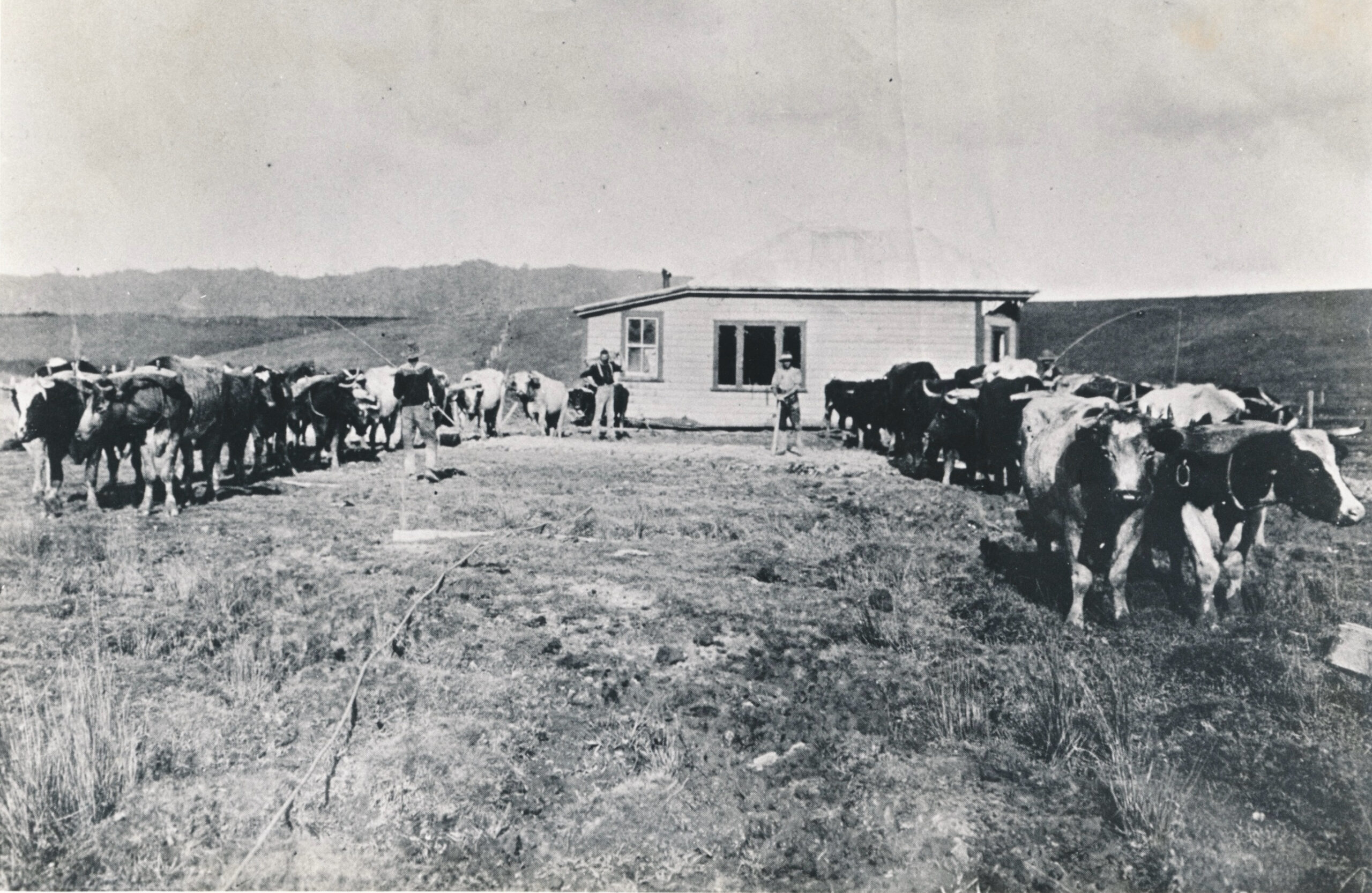
Gran had Beth awake and ready to get off the train as it pulled in to the station, and there was Dad waiting to hug and kiss her. It was only a short drive up the road to the farm and there was Mother waiting with more kisses.
The new place was certainly very different, and while it was still exciting, Beth was able to see that it wasn’t nearly as nice for Mother as the old place had been.
The house was just like a big square box sitting in the middle of a big empty paddock. No trees, no gardens, no fences.
Inside wasn’t any better. The floors dirty, the walls dark brown, no bathroom, no wash-house. What really terrified Beth was the lavatory. It was away out in the paddock, and at night the walls were covered with shiny black beetles, which if you touched them, gave off a dreadful smell. Most of the furniture and things were piled into an old shed while everyone cleaned a room at a time. The beds were all up but everything else was like a big picnic.
Except for the lavatory, she thought it was great fun.
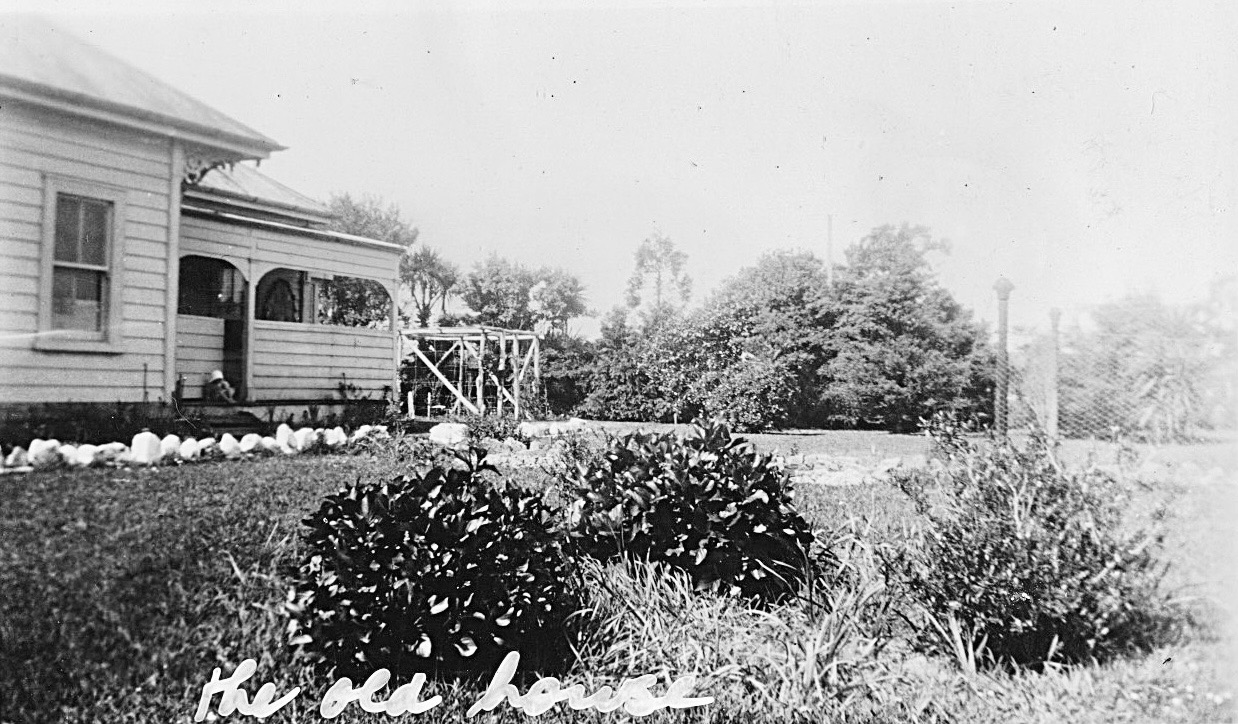
Gradually the house was cleaned up and places found for most of the furniture. Mother had a lot of trouble storing things, as there were no cupboards anywhere. Dad got a local man, who was a carpenter, and between them, they removed one wall of the old kitchen and built on a kitchen, pantry and wash-house, all opening out onto a large, long verandah. The old kitchen was then used as a dining room. They also built a bathroom, and by this time everything was pretty well organised. Mother had a big black wood stove in her new kitchen, and there was a lovely big open fire in the lounge. There were lots more things she wanted done but knew they would have to wait until the farm buildings and fences were all built.
§
Very few of the farmers owned cars or trucks, and horses were still used for a great deal of the farm work as well as for travelling anywhere. The roads were narrow and winding and covered with metal, often very large lumps, that made a rough surface. Some of the roads were just clay and in the wet weather were too muddy to travel on and the cars would get stuck.
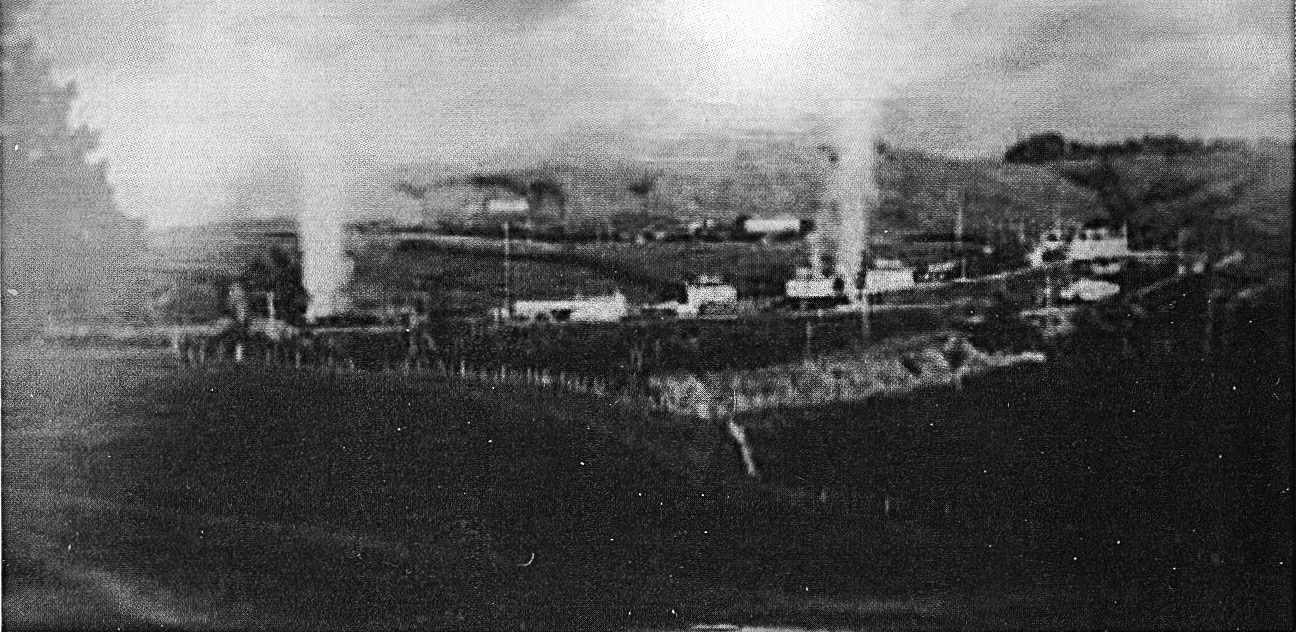
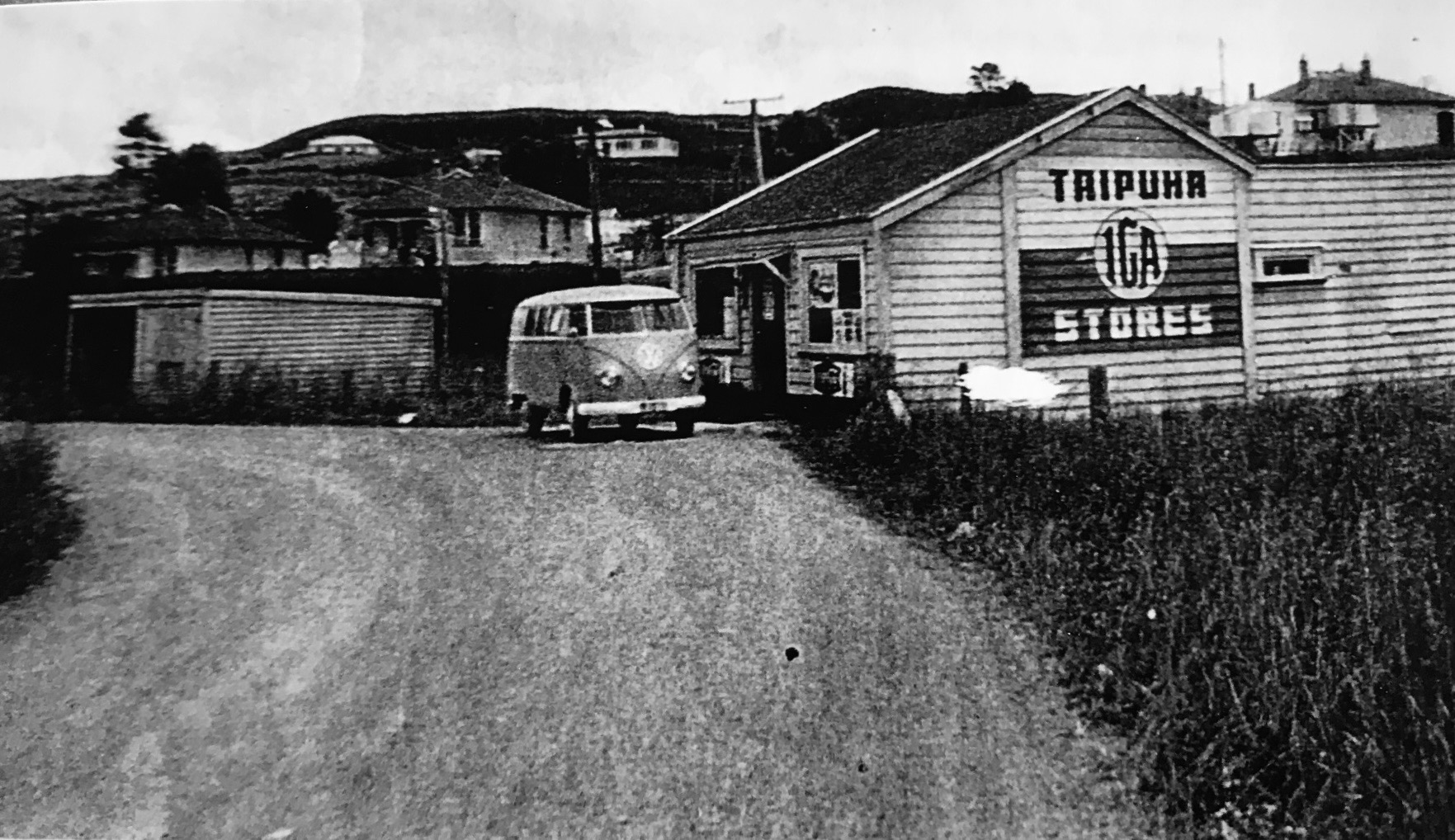
As well as the Railway Station, there was a small General Store and a big Hall, where dances were held. The dances were great fun, because everyone went, including the children, who would be put to sleep on rugs in a corner of the hall. Beth’s Mother was one of the Ladies who played the piano for the dances. People came in cars, trucks, on horseback and in gigs, and often the ladies changed into their pretty frocks in the Dressing Room of the Hall. A dance was a very exciting event and was looked forward to by everyone in the district.
Church services were also held in the Hall, every other Sunday, and a Minister from one of the larger country districts would ride over to conduct the service. Beth’s Mother played the piano for the church service and everyone sang loudly.
The Hall was also used as the School, and Beth was sad that she lived close enough to walk there each day. She envied the rest of the 12 pupils who all rode their ponies. There was a little stove in one corner of the Hall and in the winter all the desks were moved up closer to the fire as it was very cold in the big Hall. The teacher let the children put their wet coats and boots up by the fire to dry, and the two oldest children made hot cocoa for all the pupils at morning play time and lunch time. Beth really enjoyed it, and sometimes for a special treat Mother let her take some sandwiches and stay there for lunch.
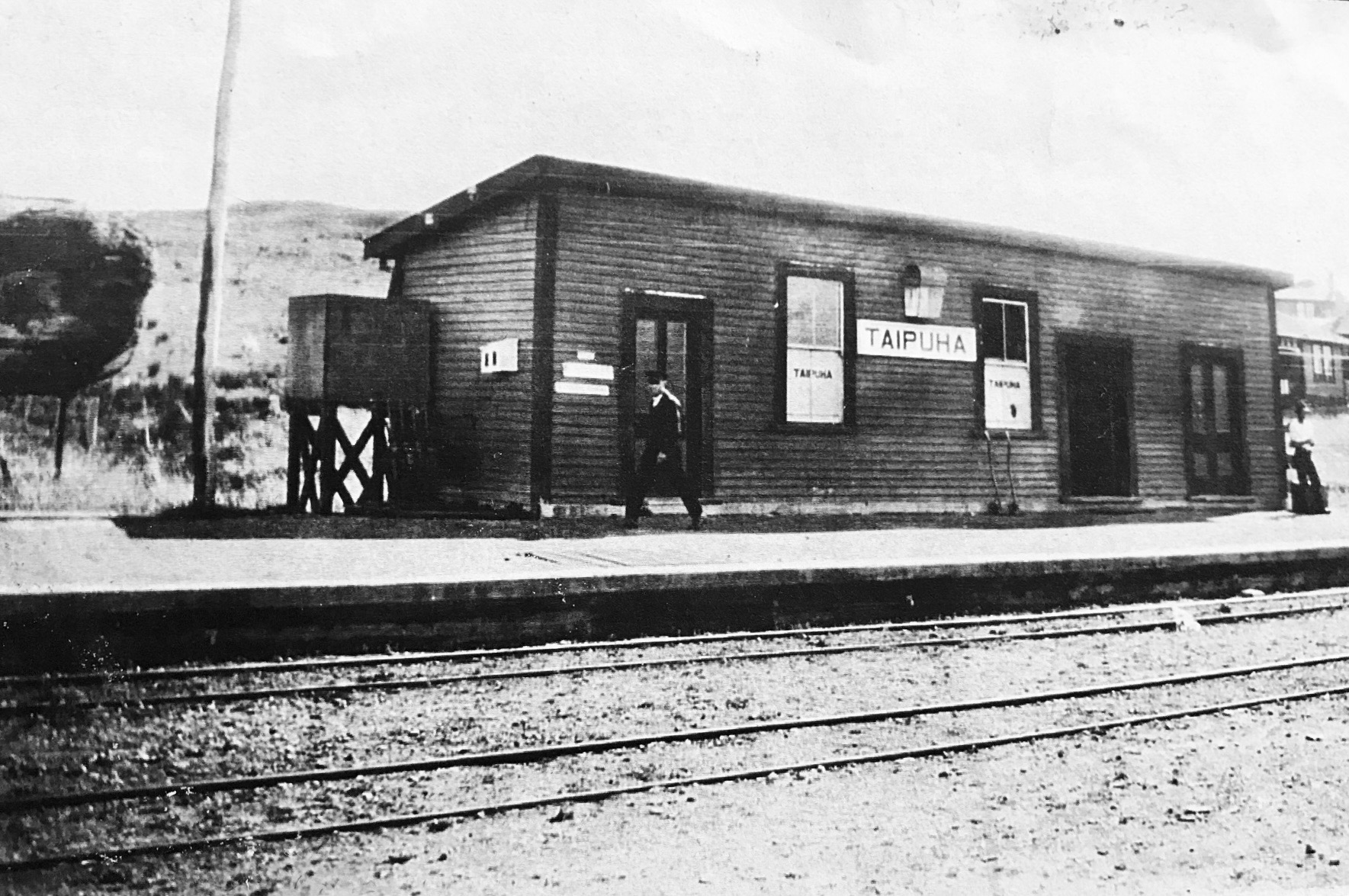
The man who worked at the Railway Station, and operated the levers for all the trains, had a little Post Office in one corner of the Station, and the mail for all the farmers came in a big sack on one of the trains. It arrived about lunch time and one of Beth’s brothers would ride down and collect their letters and also, the Herald. As Beth got older, she was allowed to go for the mail and also to collect groceries for Mother.
Groceries were bought at the little General Store, or from the big town, some miles away, when they made an occasional trip there.
It was very thrilling to be taken to Town because it was a long trip and all sorts of things could happen on the way. In the summer time it was easier, but the winter was very difficult. The car had to have “chains” on its wheels to prevent it getting stuck in the mud, and the men always wore their work clothes. When you had travelled so far the road improved a little. Then the chains could be taken off, and would be piled behind some bushes to be picked up and put on again for the return trip. The good clothes would be removed and work ones put on, and away you went again. Sometimes, if it started to rain heavily, the road would get flooded and the car couldn’t get past that place. Then you either waited for the water to go down (if the rain stopped), or you returned home, or, if it was still raining on the way home from town, you went back to Town and sometimes had to stay the night. That was an adventure too, because then you stayed in a Hotel.
Beth was very happy on their new farm and hoped that the rest of the family was as happy as she was.
Footnotes
- This photo has appeared in the Northern Advocate twice, the first time in about 1969, with the caption:
House moving, 1911 style. A photograph taken at Taipuha showing a house owned by a Mr Morris being shifted from one end of his farm to another. The bullock teams were owned by Mr Henry Hartnell. The house is still standing and is now occupied by Mr Ross McCarroll. The photo was loaned to the Advocate by Mr R. G. McAdam, of Taipuha.
Ross McCarroll was Dorothy’s oldest nephew. According to Ross the house was moved from its original site a mile away on the Paparoa-Oakleigh Road, and one of the bullock teams was owned by Mr McAdam. The McAdam family feature later in Dorothy’s stories.
The photo was published again in 1994, in a feature called “Lest We Forget”, but the provenance seems to have been forgotten, with the caption now simply reading “somewhere in Northland”.
↩︎ - The Express trains used to cross at Taipuha Station every week day at 1 o’clock. The drivers and guards used to swap trains. The sight and sounds of steam trains coming and going was a familiar and majestic sight. — The quotes are from Ross McCarroll’s memoir, The Man from Taipuha.
.
Ross described a train coming into the Station one day with smoke coming out of a wagon. It was shunted off onto the loop, and turned out to contain a consignment of liquor bound for Whangarei. A work gang staying in the huts helped themselves, and celebrated accordingly.
Two other incidents were tragic. In the 1940s a guard who was helping shunt wagons slipped and fell on to the line, and was run over by one of the wagons. Ross was told to go away, and wasn’t given that day’s mail. In the early ’60s a railway worker had his own son and the storekeeper’s boy with him on a jigger when a train suddenly appeared. The man did his best to save the boys by pushing them off the jigger, but the second boy fell too close and was killed. The “uncanny thing” was that the same engine driver was involved in both accidents.
↩︎